
University of Vienna conference: Speaking out before silence wins – An urgent plea for freedom of religion in Japan
A Dangerous Precedent: Japan’s Assault on Religious Freedom and Its Global Fallout
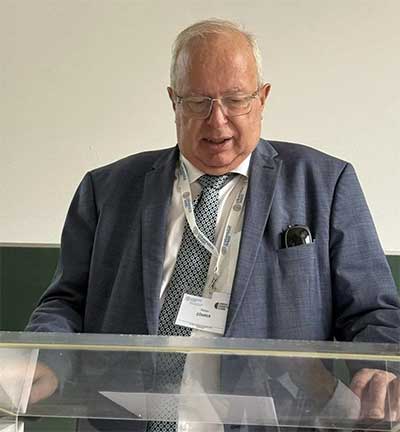
Peter Zoehrer
a speech by Peter Zoehrer, Journalist & Executive Director, FOREF Europe at the 8th annual conference of the European Academy of Religion (EuARe) at the University of Vienna. The speech was delivered on the 3rd day of the conference, on 10th July 2025, in a session on second-generation members of, and apostates from, new religious movements in Japan and elsewhere. The conference is a premier international forum for scholarly exchange on religion’s role amid socio-cultural transformation. The European Academy of Religion is known as the major forum for academic research on religion and its relevance for society.
1. Introduction
Ladies and gentlemen, esteemed colleagues, and friends,
It is an honor to speak at the 8th Annual EuARe Conference here at the University of Vienna. I address you today not only as a journalist but also as Executive Director of FOREF Europe, a Vienna-based human rights NGO dedicated to defending Freedom of Religion or Belief (FoRB) as a fundamental civil right.
While other presentations in this session offer academic analyses, I speak from the vantage point of an activist and passionate advocate for religious liberty. My hope is that this non-academic perspective will add a dynamic and perhaps urgent dimension to our discussion.
What I share today is not merely a legal case – it is a global warning. Since the assassination of former Prime Minister Shinzo Abe in July 2022, the Unification Church — also known as the Family Federation for World Peace and Unification (FFWPU) — has been subjected to an unprecedented, state-driven campaign of repression in Japan.
What is unfolding threatens to become a blueprint for suppressing religious freedom – not just in Asia, but across democratic societies worldwide.
2. The Abe Assassination and the “Court of Public Opinion”
The assassin, Tetsuya Yamagami, blamed the Unification Church for his mother’s financial ruin due to past donations. Yet instead of treating this as a criminal act by a disturbed individual, the Japanese media orchestrated a nationwide moral panic – a textbook case of blaming the victim and exonerating the perpetrator.
In this narrative inversion, the Church – itself the indirect target of political violence – was turned into the scapegoat.
Within two weeks of Abe’s death, more than 700 articles and broadcasts vilified the Church as a societal menace. ¹ The media narrative was dominated by anti-cult lawyers – many affiliated with the Japan Federation of Bar Associations – who were given exclusive access to major platforms.
What emerged was a “media firewall”: a closed information loop in which alternative perspectives – including those of scholars, Church members, or international legal experts — were systematically excluded.
Public opinion was manipulated. Emotional testimonies were treated as fact. In this emotionally charged environment, political action soon followed.
3. The Dissolution Order: Criminalizing Belief Without Crime
In October 2023, the Japanese government filed a request to dissolve the Unification Church’s [See editor’s note] legal status as a religious corporation.
This action was not based on any criminal conviction. No court has found the Church [See editor’s note] guilty of illegal conduct. Instead, the dissolution relied on civil complaints, politicized hearings, and unverified allegations – not on judicial rulings.
This move flagrantly violates Japan’s commitments under international law – particularly Article 18 of the International Covenant on Civil and Political Rights (ICCPR), which protects the right not only to believe, but to organize, teach, and practice religion.
Significantly, UN Special Rapporteur Nazila Ghanea publicly raised concerns about the case and offered to visit Japan to investigate potential FoRB violations. ³ To date, the Japanese government has failed to respond to her repeated requests.
What does Tokyo have to hide? If the process is fair and transparent, why ignore the UN’s top human rights envoy?
4. Silencing the World: Ignoring Global Appeals
This is not just a domestic matter. Leading international scholars, FoRB experts, and respected political leaders have appealed to Japan to halt this dangerous course.
These include former UN officials, Members of the European Parliament, renowned constitutional scholars, former heads of state, and over 400 senior advisors from global civil society networks.
But their appeals – formal letters, legal analyses, public statements – have been met with deaf ears in Tokyo.
What we are witnessing is not simply denial – it is the defense of a national narrative that scapegoats a minority religion to deflect from institutional responsibility.
A democracy that silences international counsel and censors domestic dissent is not acting in the spirit of human rights.
5. Real-World Consequences: The Human Cost
Beyond the legal arguments and diplomatic implications lies a deeper human tragedy: the daily suffering of ordinary believers – especially among the second-generation – who have been scapegoated for a crime they had no part in.
Since the dissolution order was filed, Church [See editor’s note below] members have experienced:
- Mobbing and bullying in schools and universities
- Rejected applications and blocked access to education
- Bank accounts frozen, car rentals denied
- Public venues withheld from use
- Marriages destroyed under social pressure
- Job interviews canceled after religious affiliation was revealed
- Social and interfaith exclusion
- And in some tragic cases, depression and suicide
You will soon hear the powerful video testimony of Seijin, a second-gen member whose life has been deeply affected by this campaign. His story reveals the silent emotional toll of being stigmatized and scapegoated by the state and media alike.
6. CCP Endorsement: A Chilling Signal
Shockingly, China’s Global Times – a mouthpiece of the Chinese Communist Party – praised Japan’s crackdown, calling it a “positive example” and encouraging other nations to follow suit. 1
This endorsement comes from a regime known for:
- Cultural genocide in Tibet
- The internment of over a million Uyghur Muslims
- The banning of house churches, Falun Gong, and other groups
If the CCP applauds Japan’s actions, something is gravely wrong. Democracies should never adopt tactics that win praise from authoritarian regimes.
7. The Copycat Effect: From Asia to Africa and Europe
The repercussions are global. Across Africa, at least five nations are now considering or implementing restrictions against minority religions.
In Rwanda, more than 5,000 Christian churches were shut down under the pretense of “public order”. 2 A regulation banning groups that reference a messiah has now passed.
Even South Africa is currently debating laws to monitor and potentially dissolve religious organizations deemed “controversial” or “harmful to public harmony.” 3
In Europe, especially France, government agencies like MIVILUDES – in coordination with FECRIS, a network of anti-cult organizations – have reportedly consulted with Japanese officials to explore similar strategies. 4
This is not religious reform. It is the spread of soft totalitarianism: where bureaucratic tools replace open repression, and religion is quietly erased under the cover of legality.
8. Why This Matters for All of Us
Let me be clear: this is not a theological debate. It is a matter of principle.
If a government can dissolve a religious group based on social stigma instead of criminal evidence, no minority is safe. Today it’s the Unification Church – tomorrow it could be another community.
“Everyone has the right to freedom of thought, conscience, and religion.” – Universal Declaration of Human Rights, Article 18
This right is not dependent on popularity, orthodoxy, or state approval. It is either universal – or it means nothing at all.
9. A Call to Moral and Academic Leadership
This university is a beacon of knowledge. This conference is a forum of conscience. So I appeal to you:
- Academics: Challenge the Japanese narrative with rigorous scholarship
- Journalists: Break the media firewall and restore balance to public discourse
- Governments and NGOs: Speak out clearly and courageously – before this becomes a global norm
The dissolution of the Unification Church in Japan is not a routine legal measure. It is a dangerous precedent. If left unchallenged, it will become the template for religious repression worldwide.
Let us choose courage over conformity. Truth over propaganda. Let us protect freedom – before it’s too late.
Thank you.
Footnotes:
- “China’s Global Times hails Japan’s crackdown on the Unification Church,” Global Times, Nov 2023.
- “Rwanda closes thousands of churches,” Reuters, March 2018.
- FOR SA and South African religious freedom watchdog reports, 2024–2025.
- Reports from CAP-LC, OSCE HDIM side events, and European Parliament Intergroup on FoRB, 2023–2025.
Featured image above: Peter Zoehrer, journalist and Executive Director of FOREF Europe. Here, in Tokyo, Japan in April 2023. Photo: FOREF