
From the Feminine in Christology to the Feminine in Ontology – Opening to a Gender-Balanced Understanding of God.
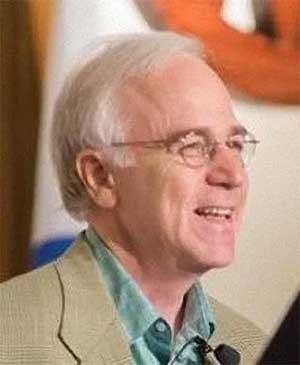
a speech by Dr. Andrew Wilson, Professor of Scriptural Studies at HJ International Graduate School for Peace and Public Leadership (HJI), New York, USA,. The speech was given on 11th April 2024, the first day of an international online 3-day conference on “Peace and Public Leadership: Addressing the Challenges of Our Times”, organized by HJ International Graduate School for Peace and Public Leadership, New York, USA. Dr. Wilson’s speech was delivered during session 3, which had the theme “Christology and Women: Relevance for Peace”. Andrew Wilson’s current research interest is the theology of God as heavenly Mother.
Part 1
If we are going to address patriarchy to arrive at a more gender-balanced society, it is important to get back to Christological and theological foundations. Those feminist theologians who only work from the standpoint of social justice don’t really get at the root of the issue. It is one reason that some of them end up being alienated from religion and the church.
In traditional Christology, Christ is male; after all, Jesus was a man. As the second Adam, he redeems the sin of Adam. Jesus the Second Adam redeems of the sin of the man Adam. Furthermore, the man Jesus, as the Word made flesh was the incarnation of Heavenly Father, the God who is male. Accordingly, the Christian expectation of Christ at his return is for a man.
But in Unification Theology, Christ must be male and female, both from the standpoint of incarnation and from the standpoint of salvation.
From the standpoint of incarnation, Christ is the incarnation of the Word from which all things were made (John 1:3). The Word from which all things are made must be both male and female, because all things in creation are in pairs, like male and female.
This is ultimately because God, the basis of the Word, has both male and female characteristics, which Divine Principle asserts, referencing Genesis “‘So God created man in his own image, in the image of God, he created him; male and female he created them.’ (Genesis 1:27) This supports the idea that God, as the subject partner, has the dual characteristics of yang and yin in perfect harmony.” (Exposition of the Divine Principle, pp. 18-19)
The implication is that Christ, as the incarnation of the word, must be both male and female.
And then from the point of view of redemption, St. Paul taught that Jesus, the Second Adam, redeems mankind from the sin of the first Adam, saying, “For just as by one man’s disobedience, the many were made sinners, so by the one man’s obedience the many will be made righteous.” (Romans 5:19)
But how can this be, since both Eve and Adam sinned at the Fall? So, redemption from the Original Sin, Unificationism argues, requires in addition to the second Adam, the Second Eve.
This brings us to the mission of Reverend Moon from the perspective of Unification Christology. He understood that Jesus’ mission was unfinished, and that he was responsible to complete Jesus’ mission.
Matthew 22,2-10And the main thing that Jesus didn’t do during his lifetime was to marry and establish Christ as male and female.
Jesus hinted at that in a few places. For instance, in the parable of the Wedding Banquet in Matthew 22:2-10, the guests were invited to the wedding of the King’s son, that is God‘s son, but they refused to come. That is a thinly veiled metaphor for how the Jewish people were expected to support Jesus so that he could marry, but they did not.
Matthew 25,1-13In the parable of the Ten Bridesmaids in Matthew 25:1-13, the bridegroom, that is Christ, is delayed. This is the delay of the Second Coming (the Parousia), which points to the idea that at the Second Coming Jesus will marry. It is when Jesus will come as the bridegroom to receive the Bride.
And confirming that this will be an event at the Second Coming then in Revelation 19:9, we read, “Blessed are those who are invited to the marriage supper of the Lamb.”
These are Biblical hints which point to the revelation that Reverend Moon received from God, that as the man chosen for the role of the Second Coming, he would have to fulfill the parts of the mission of Jesus that he did not finish in his lifetime, and the first of these was to marry. He had to find the Bride, and they would hold the marriage of the Lamb.
Contains extracts from Father and Mother Moon‘s speeches, describing True Parents’ life course in their own words.
That was to be the first task of the Lord of the Second Advent and the focus of his mission at the start of his ministry in 1945. He laid the foundation so that on 11th April 1960, True Parents’ Holy Wedding could take place.
To denote the Bride, Reverend Moon, in one of his early speeches coined the term the “Only-Begotten Daughter”. He said, “Jesus called himself God‘s only begotten Son. The only begotten Son needs the only begotten Daughter. Jesus was to embark on the path to save the world, but he could not do it alone. He needed to establish his family as the foundation.” (Cham Bumo Gyeong, 1.1.2.3, 10th May 1968, p.32)
Those words were from 1968. Thus, long before Hak Ja Han Moon started calling herself the Only-Begotten Daughter, Rev. Moon already introduced that concept, even though it got “buried” for a long time.
The mission of the Only-Begotten Daughter
Jesus Christ, the Only-Begotten Son, is the image of God‘s masculine nature. As we read in John 14:9, “Whoever has seen me has seen the Father.”
Accordingly, Hak Ja Han Moon, the Only-Begotten Daughter, is the image of God‘s feminine nature.
But to fulfill that position, she has to recover the tarnished dignity of Eve who had sinned. After all, the idea that Eve was the main person responsible for the Fall goes all the way back to Adam, who blamed Eve. Right in the Garden, he said to God, “The woman whom you gave to be with me, she gave me the fruit of the tree, and I ate.” (Genesis 3:12)
And ever since the Fall, women have been dominated by men. As we read in Genesis 3:16, “Your desire shall be for your husband, and he shall rule over you.”
Therefore, despite the fact that the Only-Begotten Daughter was born sinless, she could not stand side-by side-with the Only-Begotten Son and share his authority and dignity without dealing with the fundamental problem of Eve’s tarnished dignity or Eve’s taint due to the Fall.
That is why Reverend Moon worked with Hak Ja Han by putting her through many difficult courses, on the family, society, national and world levels. He had her speak around the world, to Christian audiences and even in Beijing at the Great Hall of the People and in Moscow at the Kremlin. With that, finally he declared that Hak Ja Han had recovered the dignity of Eve:
“True Mother won the supreme victory over the highest level of Satan’s world […]. Based upon that recognition by God and Satan and all people that she had fulfilled her responsibility as the True Mother […] she could occupy and act from the precious position of Eve whose mistake in front of Adam has been restored.” (Chambumo Gyeong 12-4-3, 8, 14th June 1999, page 1422)
Note that Reverend Moon does not deny the biblical story of the Fall, but affirms it and says that this woman, Hak Ja Han, has victoriously overcome the problem of Eve.
With that victory, the Only-Begotten Daughter also laid the foundation for all women to realize their original dignity as God‘s daughters.
Nevertheless, patriarchy is still well-established and entrenched in Korea and in societies all over the world. And this has been Hak Ja Han‘s challenge of late: She has to overcome patriarchy.
Reverend Moon couldn’t do that for her, even though Hak Ja Han stood by Reverend Moon‘s side in a movement that celebrated him as the Messiah. That is because most Unificationists viewed her mainly as his consort.
She bore him 14 children and then stood by his side at Blessing ceremonies for giving rebirth. These roles of True Mother, to bear children both in the physical and spiritual sense, are, you might say, within a traditional mother’s role. In traditional Korean society, the woman stays at home and bears the children.
It is true that Reverend Moon praised her for more than that and had her walk beside him. The latter was an innovation, because in the traditional Korean society, women walk behind their husbands. Nevertheless, Reverend Moon was the one who called all the shots.
So Hak Ja Han, after Reverend Moon passed, was not in a very good position. To just stand up and say, “I’m the Only-Begotten Daughter. I’m the heir and the one who should lead the movement,” aroused a lot of push back.
She faced a movement that was not well prepared to accept her leadership because of the patriarchal entrenchment in society. That she, a woman, would exercise her authority co-equal to that of the male Messiah was an affront to established patriarchy.
Yet she has been confronting this bias directly by taking up the title “Only-Begotten Daughter”. She intentionally does not call herself by the title “True Mother”, which could be said to be a traditional woman’s role, but instead calls herself the Only-Begotten Daughter, the female Christ.
Her innovations were resisted. First, she revised the Unification scriptures. The revisions were well-warranted because there were mistakes in them and the Cheon Seong Gyeong in particular was poorly constructed. She also added her words, befitting to her position as the female Christ. Yet, the fact that she ordered revisions were controversial. “Who was she to change what the Messiah had authorized?” said those elders steeped in the patriarchal concept.
And then her own sons betrayed her, forming schisms, declaring that they were Rev. Moon’s true successors. They too were acting according to the traditional patriarchy in Korean society, where in Korean history, after the death of a king, the eldest son takes over, and the former queen stands aside.
But Mother Moon is fiercely determined to honor her position as the Only-Begotten Daughter for the sake of God’s ideal that must be gender-balanced.
To Be Continued …