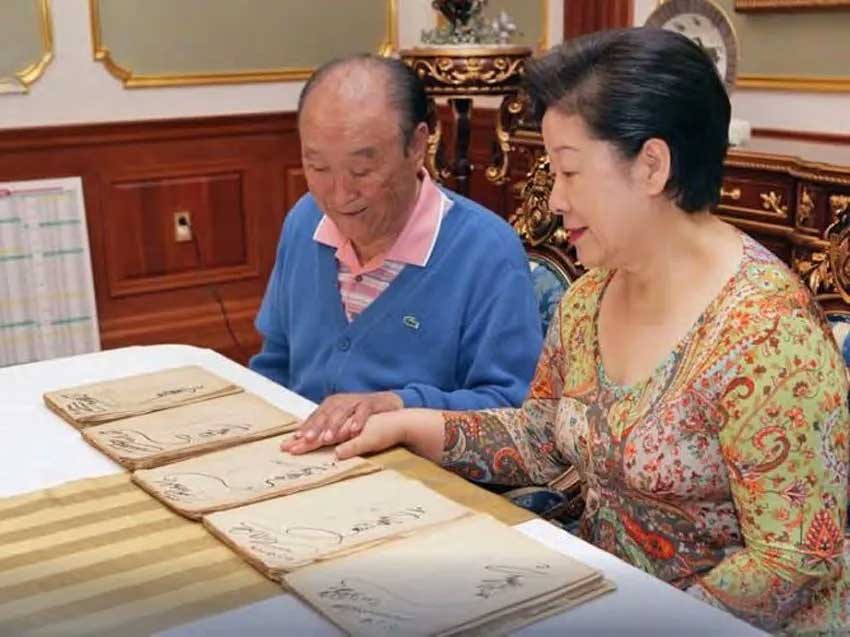
American scholar discovers in Father Moon’s early writings key concepts to understand your relationship with God and others

A presentation by Dr. Andrew Wilson, Professor of Scriptural Studies at HJ International Graduate School for Peace and Public Leadership (HJI), New York, USA, given on a special online program 7th May 2024 hosted by HJI and the Higher Purpose Forum (HPF).
Part 3 (Click to Read Part 1, Part 2)
To conclude this talk, I will go to the last section of Wolli Wonbon’s chapter on science, which elucidates the Principle in psychology.
In this section, Reverend Moon used the terminology “core entity” and “complementary entity”, which is something like what Exposition of the Divine Principle calls “subject partner” and “object partner”. They are terms that denote different positions.
As I explained before, an “object partner relationship” denotes the quality or closeness of a relationship. An opposite of “object partners” (대상, 対像 in Korean) are “counterparts” (상대, 相對 in Korean) – beings that are distant from each other and are set up to begin a relationship, but they are not yet perfectly giving and receiving.

For example, in speaking about being God’s object partner: If your relationship to God is such that you only know God as the being who gave Moses the laws and commandments that you religiously follow as your duty for the covenant, you are not an object partner of God, but only a counterpart. If you only know God as the being who justifies you because you believe in Jesus and have received his saving grace, you are not an object partner of God, but only a counterpart.
To be God‘s object partner, you need to know God‘s heart, God‘s situation, God’s heartbreak, and God‘s joy. You have to be able to relate with God in a very intimate way.
Most religions don’t get past relating to God as a counterpart. If you only know God in faith, that God is giving you blessings, it’s not enough to make you God’s object partner; your position is that of a counterpart.
So, “object partner” and “counterpart” in Wolli Wonbon describe the quality or closeness of a relationship, and the “object partner relationship” is the one where the beings are totally united. They are resonating with each other. They are vibrating in time. Each being is living for the sake of the other being. Each one thinks less of itself and more of the situation of its partner. Their giving and receiving is smooth and flows effortlessly.
But among object partners, sometimes one is the “core entity” and the other is the “complementary entity.” I don’t want to use “subject” and “object” here – the terminology from Exposition of the Divine Principle – because it’s too confusing. I will stay with the terminology of Wolli Wonbon.
All living things are ordered systems of core entities and complementary entities. As core entities and complementary entities, they should be object partners with each other. They should give and receive well for the health and well-being of the organism.
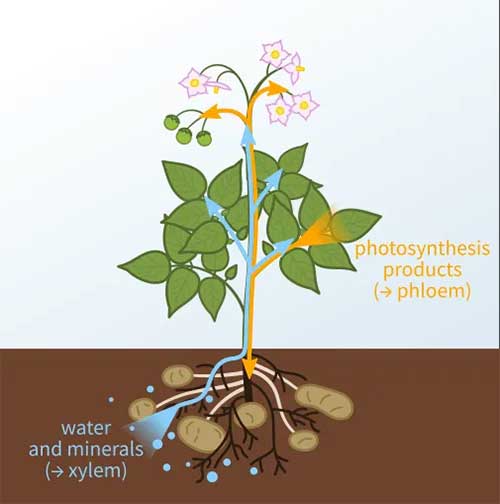
Thus, arteries and veins relate as core entities and complementary entities for transporting nutrients through the body of an animal. Xylem and phloem relate as core entity and complementary entity for transporting nutrients through a plant. In the case of human beings, the mind is the core entity of the body, and the body is the complementary entity of the mind.
For example, why do we feel hungry? That feeling arises because lack of food creates a gap between our mind and body, between our core entity – the mind – and its complementary entity – the body. It signals that they cannot become good object partners.
The mind, the core entity, needs to satisfy the desire of the body, the complementary entity, because without the body, the mind cannot exist. Our nerves cause us to feel hunger so that we’ll get serious about looking for food, so that we can sustain the life of the body.
The subject partner – using terminology from Exposition of the Divine Principle – needs to live for the object partner. The mind needs to live for the body, because without the body, the mind cannot exist.
Also, these circuits between mind and body, between core entity and complementary entity, are unique and different for different people. That is the reason why people have different preferences for food. Some people prefer shellfish, other people prefer steak, still others prefer vegetables. Their mind and body are engaging in action on different circuits.
We can move from this to discuss perception. Perception means experiencing something in the outer world that connects with thoughts and images in our mind or with the emotions in our hearts. How do we know that the things in the outer world are accurately perceived in the mind? This is a longstanding question in psychology.
The Principle perspective is that the outer world and the inner world of mind must be in a relationship of object partners. This requires that they have some correspondence in terms of form: between the “form” in the mind and the form in the outer world. In other words, there must be elements within the mind – the core entity – that correspond to features of things in the outer world – the complementary entity – so that they can stand as object partners to each other.
This is the position of Rationalism in philosophy: that our reason precedes our sense experience, or that our mind has innate ideas about things in the world prior to our perception of them. Then, when we receive images through our senses, the correspondence with the forms in our mind enables us to perceive them correctly. This gets into what Unification Thought’s theory of Epistemology discusses as forms of thinking; it goes into this matter in great detail.
However, when we look at object partner relationships involved in perception, cognition and knowledge – and this is one thing that is distinctive in Wolli Wonbon – it is not just one relationship of internal nature and external form, or mind and body. There are many levels of relationships.
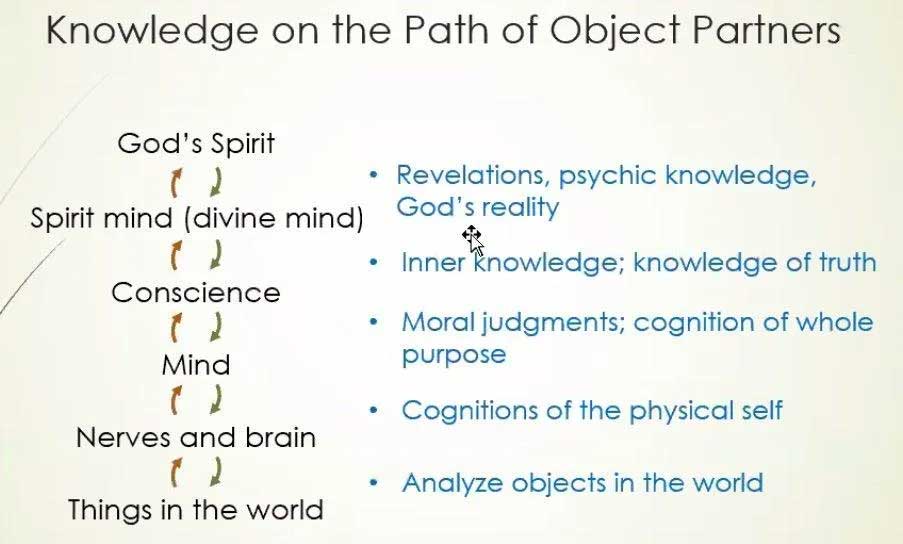
Wolli Wonbon calls it a path of object partners, of complementary entities and core entities at each level. At the lowest level, things in the world as complementary entities are object partners to the nerves and the brain, the core entities which analyze the things in the world to form a perception. At the next level, the nerves and the brain, engage in giving and receiving as complementary entities with the mind, the core entity where perceptions become cognitions: we can know what things are.
At the next level, the mind as a complementary entity is the object partner to the conscience, the core entity where moral judgments arise, and our cognitions are connected to the whole purpose. Then the conscience as a complementary entity is the object partner to the spirit mind or divine mind, the core entity where we gain inner knowledge and knowledge of truth.
And finally, our spirit mind is the complementary entity to God‘s Spirit, the Core Entity, whereby when we become object partners we can receive revelations, we can gain psychic knowledge about what other people are thinking, and we can even come to know God‘s reality.
So, there is a ladder of object partners, from complementary entities to a core entity which is in turn the complementary entity to a higher core entity, and so on. It is a path of object partners whereby we gain knowledge, from knowledge of things in the world all the way to knowledge of God.
Therefore, mind-body unity is not simply a concept of two levels of mind and body, as stated in Exposition of the Divine Principle. Rather, there’s a ladder of levels, ranging from things in the outer world to the most internal realm with God.
If we are to really have mind-body unity, all of these levels have to be aligned. Especially, we need to be aligned with God‘s Spirit. From God‘s Spirit to our own spirit, to our conscience, to our mind, to the nerves in the brain, to things in the world, everything should be aligned. That is when we have true mind-body unity.
In this way, human beings are meant to be the mediators who connect all things with God. Through human beings, God and all things can be on a line of inseparable relationships. It is a ladder of relationships, mediated by human beings, from things in the world all the way to God.
And therefore all things in the world, in the outer world, can fulfill the purpose to become God‘s object partners through human beings. For this, what is essential is that we become God‘s object partners by establishing the Principle in our lives.
At another place in Wolli Wonbon, Reverend Moon uses the metaphor of an electrical transmission line that runs from the central generating station to the circuit boxes in people’s houses. God is the electrical generating station, the circuit boxes in people’s houses are all things, and human beings are the connecting wires. The wires should not offer any resistance if the electricity is to flow well along the circuit. That is the responsibility of human beings, by making good object partner relationships.

This concludes my brief explanation of Reverend Moon‘s teachings on science, which he put forth in the Wolli Wonbon in 1951-1952. At that time, he already conceived of a future where science would demonstrate to people the paradigm of the Principle.
In the future, people won’t need to go to the Bible; people won’t need to go to religion. They can go directly to science and understand through science the way the Principle operates in the natural world. Science will instruct us about the way we should be as God’s object partners, giving and receiving with one another and giving and receiving with God. Then, humankind will build a peaceful harmonious world based on science.
This brings us to the end of my presentation. I hope you enjoyed it. I know it was quite rich and full of a lot of content, but Wolli Wonbon is like that. There are gems and nuggets of truth on every page.