New insight into the concept of God – our Heavenly Parent
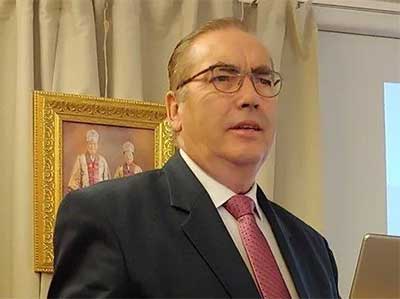
Dr. David Hanna
This lecture given by Dr. Hanna, head of the North European sub-region of the Family Federation, at an international prayer meeting by Zoom on 27th March 2024, which is based on the lecture given by Jin-su Hwang, professor of theology at Sun Moon University, Asan, South Korea.
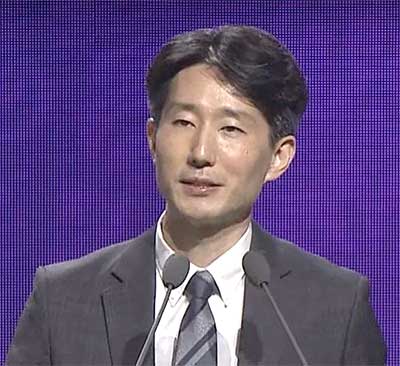
This is the second in a new set of seven lectures, and the title is “Heavenly Parent”. It has Jin-su Hwang, professor of theology at Sun Moon University, as the original author and presenter.
This lecture deals largely with the shift from referring to God or addressing God as “Heavenly Father” to “Heavenly Parent”, what this means, and why we should do it. It doesn’t set out to present a comprehensive view of God as in Unification Theology.
I have to say, as a rule, I don’t give other people’s lectures, but I can try here to give a summary of what I consider to be the most important parts of this presentation and then add, if I may, some of my own thoughts or comments at the end. So my apologies in advance to Professor Hwang for what I’ve done to his presentation.
Actually, there’s really nothing in this lecture that you will find difficult to accept, I believe, and at points the arguments are rather, shall we say, academic.
But I’m very happy that these lectures in general introduce us to some of the professors of the higher-level institutions that the True Parents have founded. They have all made great efforts to fulfil their brief.
Professor Hwang starts by expressing his interest in how we teach our children about Heavenly Parent, and how we educate them about the historical development in religious understanding that takes us from Jehovah to Heavenly Father and then to Heavenly Parent.
There are five main points addressed in this lecture. The first is taking us back to Mother Moon‘s words, the second, reminding us of God‘s dual characteristics of masculinity and femininity, as explained in the Exposition of the Divine Principle. The third point is making clear that our view is not a form of dualism, the fourth is looking at the reasons why God has been addressed historically as Heavenly Father. And lastly, the final point provides some reasoning as to why the “Era of the Heavenly Kingdom” (“Cheonilguk era” in Korean) is the era of the Heavenly Parent.
Here is Mother Moon speaking just prior to what we call Foundation Day in 2013,
“We must now change how we address God. When we pray, we will change [the Korean word] ‘Hananim’ to [the Korean expression] ‘Haneul Bumonim’. This is ‘Heavenly Parent’. It is smooth in English and is also meaningful in Korean. Therefore, when you pray, the very first words you utter should be ‘Heavenly Parent’ […]. (Speech by Mother Moon 7th January 2013 in Gapyeong, South Korea)
Dr. Hwang refers to a further passage from Mother Moon, from 15th July 2019,
“God created a man and a woman. What you need to know is that God, our Creator, exists as God the Father and God the Mother, and that is the starting point of the creation of the heavens and the earth. God created our first ancestors as a man and a woman, in the divine image. This was the principle of creation by which our Creator made heaven and earth.”
The Exposition of the Divine Principle shows its roots in oriental philosophy with reference to the yang and yin of God that is manifested in all created beings, culminating in human beings as male and female.
The explanation of the pair system is basic Divine Principle that I believe we’re all very familiar with. The yang and yin principle gives rise to gender distinctions in the natural world.
Personally, I don’t find the Unification Thought examples of this that are given, to be so helpful. So allow me to inject an explanation.
Masculinity is associated with yang qualities such as strength, assertiveness, and activity, while femininity is connected to yin qualities like receptivity, nurturing, and intuition.
It’s important to note that these definitions, they’re not fixed and can vary depending on cultural interpretations and individual perspectives within Oriental philosophy.
Now, Professor Hwang provides a quotation from Father Moon that describes this process in the following way,
“Why do we marry? It is to resemble the image of God. God is a being with dual characteristics, possessing both an invisible male nature and an invisible female nature. In one body with dual characteristics, these characteristics are in complete harmony and unity. God is a being that is whole and united. However, these complementary individual natures within God are different from each other. If the male and female characteristics of God were the same, then one would be an exact copy of the other. But they’re different. Being male and female, they must become one, become like seeds, and return to the position of God‘s original nature.” (A speech Father Moon gave 18th February 1998)
And Dr. Hwang has two more quotations from Father Moon,
“If we go to the root of the universe, we come to God, and we need to be aware that God has two natures, a masculine and a feminine nature.” (A speech Father Moon gave 15th September 1995)
So the fact that God is a being who has a masculine aspect and a feminine aspect, is already well understood. […]
Professor Hwang gives a complete definition [of God’s masculinity and femininity], which does sound very much like Unification Thought to me. He says that God exists with a masculine aspect, having internal nature and external form of masculine yang- yin, and with a feminine aspect having internal nature and external form of feminine yang-yin. Therefore, God exists not only with a masculine aspect but also with a feminine aspect.
Hwang adds that this can be clarified inductively through all things of creation, which is, of course the argument that Divine Principle puts forward in line with that of St. Paul in Romans 1;20.
“Ever since the creation of the world, his invisible nature, namely his eternal power and deity, has been clearly perceived in the things that have been made, so they’re without excuse.”
This exercise charts a course to the same conclusion as the Divine Principle. It reveals God as a being of personality, which Yang-Yin philosophy alone falls short of doing, and God has both masculine and feminine personality.
Father Moon in his Wolli Wonbon, the original text that he completed in 1952, but which is yet to be published in English, apparently talks of man as the substantial entity of Heavenly Father and woman as the substantial entity of Heavenly Mother. It’s interesting, isn’t it, that these terms are used by Father Moon so early on.
Being a member of the second generation, Professor Hwang remembers his parents bowing to each other as part of the Kyeongbae ceremony [“Kyeongbae” means bowing and is a common way of showing respect in South Korean culture. It is used in various social situations.] Maybe you’ve done this yourselves? And he explains, when we do the Kyeongbae ceremony, the whole family first bows to a picture of True Parents. Then we offer prayers. Then the couple face each other and bow to each other.
The fundamental meaning of this bowing to each other is captured in these words of Father Moon,
“Originally, parents represent the original position of God, and here husband and wife represent God’s different sides.” (From a speech Father Moon gave 17th January 1999)
Each becomes the other side’s “god”. You will understand this through the tradition of our bowing ceremony. It shows that there’s an equality to husband and wife bowing to the “god” in the other.
Mother Moon asked a gathering of women leaders,
“Have any of you wives received a bow from your husband? Did your husband ask you to sit and then offered a bow to you?” [“We bow to each other,” came the reply] And Mother Moon advises, “Equality is what you should seek.” (From a speech Mother Moon gave 29th August 2019)
Dr. Hwang’s third main point is about why this view of the Unification Principles is not dualism, by which I presume he is meaning a female God and a male God, or two beings.
I don’t think myself that this is a confusing point for most Unificationists, but Dr. Hwang solves it by stating that God’s original substance (the original internal nature and external form) that is the root of the masculine aspect and the feminine aspect, is one, not two. The dual characteristics of masculinity and femininity are attributes that belong to the original substance. They’re not the original substance itself.
There is one being we call Heavenly Parent. That leads into the question of why we have understood God only as Heavenly Father until now, and Dr. Hwang gives three reasons but talks only of the first and third points.
The first reason is the explanation of the relationship between God and the creation as being that of masculine “subject” to a feminine “object” [Explanation given in the Unification Principles]. And if we misunderstand that, he points out that the creation as female “object” is of course populated by male and female pairs.
So, if anyone is confused on this point, his helpful suggestion is to think of this relationship [between God and the creation] as a parent-child relationship rather than a male-female relationship.
The third point the Korean professor mentions, is that historically, it’s the fact that Jesus was single and did not marry that cements the idea of God as male in people’s minds. This is part of the historical progression from understanding God as Yahweh to God the Father to Heavenly Parent.
Professor Hwang does at this point tantalize us further with another reference to Wolli Wonbon. There, Father Moon says,
“People throughout history have known God only as Father, without Mother. Nevertheless, it is true to say that we did not even think about the fundamental reason that God appears only as our Father, without being our Mother. Relating to such children who do not know God as their Mother, God the Father’s pain and sorrow must be beyond description.” (Wolli Wonbon, 1952, unpublished, p.278)
Mother Moon said to Christian ministers in America,
“God wanted to be the True Parent, visible in the flesh through the first human ancestors. That was God‘s hope and dream. It is God‘s purpose of creation.” (From a speech Mother Moon gave 10th September 2017)
And Professor Hwang concludes his lecture saying that Heavenly Parent’s dream is to assume the True Parents’ bodies to realize one great cosmic family and live together forever in the joy of true love.
Dr. Hwang says that it is more in line with the spirit of the “Era of the Heavenly Kingdom” (“Cheonilguk” era in Korean) to call God the Heavenly Parent.
To Be Continued ….