By Knut Holdhus
Japanese media helping terrorist Yamagami accomplish his objectives
Tokyo, 16th February 2024 – Published as an article in the Japanese newspaper Sekai Nippo. Republished with permission. Translated from Japanese. Original article
Investigating the Request for an Order to Dissolve the Family Federation – Politics and Media out of Control
Part 3 (Click here to read Part 1 and Part 2 )
by the Editorial Department of Sekai Nippo
In the media coverage of the incident when former Prime Minister Abe was shot on 8th July 2022, there was extremely little criticism of the terrorist act itself committed by defendant Tetsuya Yamagami (山上徹也). On the contrary, the media outlets that had opposed Shinzo Abe’s politics during his tenure as prime minister, rather focused on the Family Federation for World Peace and Unification (formerly the Unification Church). Those news channels were rather more critical of the religious organisation, emphasizing Yamagami’s feelings of being a victim due to his mother’s large donations to the religious organisation. The defendant claimed those feelings were his motive for committing the crime.
The press conferences of National Network of Lawyers Against Spiritual Sales, which is in dispute with the religious organisation, have been widely reported. At the same time, the claims of the religious organisation and individual believers have hardly ever been mentioned. Amidst this, there was a widespread one-sided discourse demanding sanctions against the Family Federation. Naturally, this had a negative impact on the Kishida cabinet’s approval rating in public opinion polls.
On 19th October 2022, Fumio Kishida without much effort and without Cabinet approval, made a change in the interpretation of the Religious Corporations Act. The move was criticized as “changing one’s mind like the wind“, yet both the ruling and opposition parties joined the Prime Minister in his disregard for procedure. At that time, the Japanese media stood by and watched as the authorities readily violated the basic human right of “freedom of religion” guaranteed by the constitution. This exposed a double standard that is in stark contrast to the openly opposing attitude of the media shown during the 2015 security legislation.
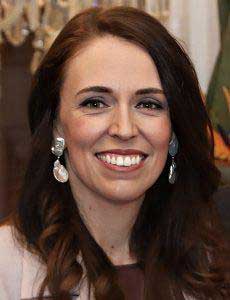
Especially since the terror attacks on the United States 11th September 2001, terrorism has been regarded as one of the greatest threats to the security of modern society. Former New Zealand Prime Minister Jacinda Ardern, said of a terrorist [who was seeking notoriety], “We […] will give him nothing, not even his name.” However, the lessons learnt from that have not been heeded [in Japan]. By allowing the Ministry of Education, Culture, Sports, Science and Technology to request a dissolution order – in other words, effectively giving the religious organisation a “death sentence” – the Japanese media inadvertently has helped the terrorist accomplish his goals.
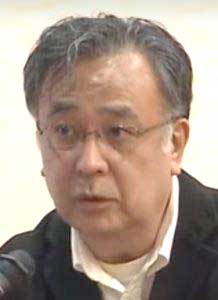
At a public symposium held on 20th January 2024, author Fumihiro Kato (加藤文宏) analyzed big data using AI and announced that the huge amount of news coverage critical of the religious organisation was ultimately directed at the Kishida administration. In order to deflect this criticism, Fumio Kishida clearly demonstrated his stance by aiming to cut ties with the Family Federation and related organizations from then on, and by issuing a dissolution order against the religious corporation in an effort to avoid blame and regain support for his cabinet.
Under these circumstances, the religious organisation and ordinary believers have become targets of people’s hatred. The above-mentioned Kato has condemned the media’s behavior, which rather than checking the power, has allowed it to run amok. He calls this an “information disaster”. At a press conference, the religious organisation revealed a number of discriminatory incidents, including members being fired at their workplace, cancellation of job offers, teachers criticizing the religious organisation during class, suicides, suicide attempts, and graffiti marking the facility as belonging to a “cult”. Despite the Kishida Cabinet requesting a dissolution order, its support rate has decreased. Also, the opposition parties pursuing the matter, have been unable to escape from low approval ratings.
Some say that the one-sided media coverage bashing the religious organisation has led to a rift between executives and young reporters within major media outlets. 2nd-generation members of the religious organisation have held panel discussions with journalists and experts in open forums. In addition, meetings have been held steadily to denounce 4,300 members of the religious organisation being abducted and locked up in an attempt to forcibly break their faith. The articles written by reporters who covered those events have not seen the light of day.
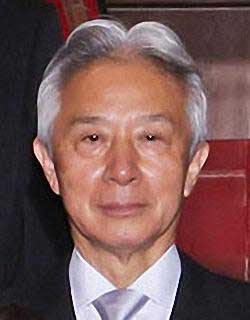
However, it was reported that Minister of Education, Culture, Sports, Science and Technology Masahito Moriyama (盛山正仁), who filed a request for a dissolution order with Tokyo District Court, had exchanged an “endorsement-affirming form” with a Unification Church-related organization in Hyogo Prefecture ahead of the 2021 House of Representatives election. Believers had actively made phone calls to support his election.
As a result, the very minister who received support from that organization ended up requesting a dissolution order. That led to voices of discontent from employees and believers of related organizations being covered by various media outlets. In the future, it should be further examined whether his action violates the freedom of religion guaranteed by the constitution. In addition, his action raises issues regarding governance.
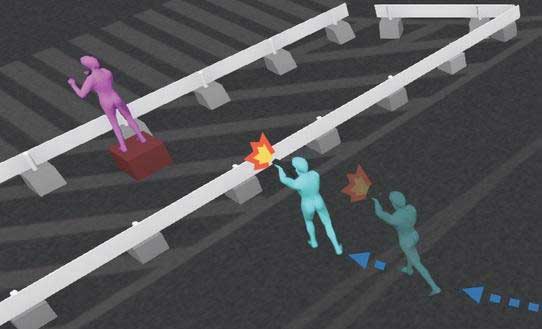
Featured image above: Positional relationship between former prime minister Shinzo Abe and the shooter Tetsuya Yamagami on his assassination. Sourced from Nikkei.com. Photo: Asanagi / Wikimedia Commons. License: CC CC0 1.0 UPDD