
Blog of Unification Theological Seminary
Click to Listen to this article:
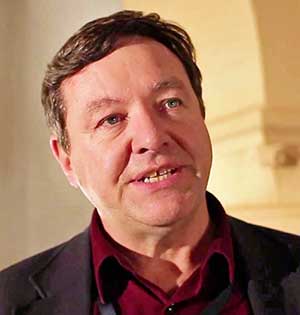
By John Redmond
When I was a shiny new member of our Unification Family, I was completely entranced with the Divine Principle.
I had spent the previous several years seeking an intellectual framework that could bridge the gap between Catholicism and the scientific method. I flirted with Marxism until I got to know some of the “leadership” of the campus Marxists and was not impressed with their sense of self-importance.
However, I didn’t have any constructive way to respond to the arguments they advanced — until I encountered the Principle.
The second thing that impressed me about this group of fellow seekers, who believed as I did, was we could be a model of the things we were talking about, and together, we could heal God’s broken heart, and significantly improve the world. Those people, currently both in and out of the various parts of the movement, remain my best and most admired friends.
I still believe that living our ideal is the primary providential responsibility of our rank-and-file members.
I fired out of three weeks of workshops with a conviction that anyone who could hear this new truth would instantly be overwhelmed and brought to the realization that we could indeed, as one elder assured me, “reach perfection in three years if we were sincere.”
I started out as a good fundraiser but frequently would get drawn into long involved discussions with interesting individuals, Christians, communists, rabbis, and drunks, frequently resulting in me missing my pickup time and my captain having to send team members into stops on my run and reminding me about what I was supposed to be focused on.
At evening programs, and in workshops, I was the guy locked in detailed arguments with guests about how “Jesus didn’t come to die” or why dialectical materialism was a limited point of view.
As Jonah Goldberg recently wrote, I was a captive of reification:
“…’the act of treating something abstract, such as an idea, relation, system, quality, etc., as if it were a concrete object.’ This confusion of words for things is a great peeve of mine. In logic, there’s a reification fallacy, in which we confuse the model for the reality: The map isn’t the territory.”
As I came to understand, no matter how clever the argument, how powerfully and clearly stated, no one could “hear” the Principle until they were understood and accepted it as a person. A few precepts come to mind: “Actions speak louder than words,” “I can’t hear what you are saying because of what you are doing,” and “Always be witnessing, and sometimes use words.”
A second round of this understanding was deepened by my children. I came to understand that “free will” is not a political concept, but the primary spiritual gift from God to all His/Her children — including mine. Our family is now on the 400-year plan to create unity. It may take less time but it won’t be because I explained about the Principle one more time to anyone.
As a family, we have decided that love is more important than doctrine, and that a successful defense of God is through a lifelong example rather than clever lectures.
This same lesson is now coming to our Unification Family. The Divine Principle explains that objects grow vertically through three stages of growth and make horizontal progress through Origin, Division, Union action.
Our international Unification Family has developed its formation stage during the lifetime of the Founders where we tried to witness to global leaders who could attend the True Parents in their lifetime and quickly build the Kingdom of Heaven. Now, as my generation is looking to “graduate,” it is necessary to take ownership of the successes and failures of that stage, and prepare for the next stage of God’s plan.
If history is any indication, this is not a neat and orderly process. Although Moses was an important historical figure, when the Israelites finally got to the promised land, he had made so many mistakes that God didn’t allow him to enter, but required the next generations to live through a chaotic period of ODU action that frequently ended badly for different segments of the chosen people.
The Christians after Jesus did not do much better. Peter and Paul had fundamental disagreements about the doctrine of circumcision and the role Judaism played in creating a Christian. It turned out, through time and many wars, that “Christian Love and Christ’s Forgiveness” was more important providentially than the letter of the law and strict tradition.
The Marxists had a similar problem growing their atheistic belief system after the death of Marx. There were furious intellectual battles and bloody physical ones as well to create the modern thread of “woke” Marxism.
Is this the future of our movement? I contend it does not have to be.
The marriage of True Parents in 1960 creates a significant turning point in providential history and is a useful starting point to plan the next level of providential success. Throughout human history, God has used small, symbolic victories to advance the merit of the age and create great advances in humankind’s recovery of its original potential. We can learn from the tactical failures of the past and speed up the cycle of restoration if we practice patient love.
Noah successfully regained the Foundation of Faith that Adam had squandered. Everything after Noah’s landing of the ark was preparation for the next level of the Providence. His sons did not turn out to have the same character as he did, but God was able to keep his foundation for Abraham. Abraham and Sarah restored the foundation delayed by Noah’s sons, but in failing to cut the doves and pigeons, sentenced his tribe to years of suffering.
Jacob and Esau successfully achieved a moment of unity, but after that, lived apart and eventually (according to some sources) Jacob’s grandson killed Esau. When Moses sought to move his people from Egypt to Canaan, his way was blocked not by Egyptians, but by the bitter Edomites, sons of Esau, who still hated the sons of Jacob.
Although Jesus’s crucifixion ended his public mission, his foundation enabled True Parents to create an irreversible foundation for the Kingdom, through the Blessing. This foundation needs to be substantially extended to the tribal, national, world, and cosmic levels.
Each of these central figures has given God a significant victory early in their lives, but when they sought to extend their victory to their family and beyond, they often made strategic and tactical mistakes that slowed adoption and expansion.
Moses frequently lost his temper and Abraham and Isaac’s decisions around their sons seem questionable. If their descendants had sincerely sought to inherit the patience, heart and purpose of the parents, not just their power and money, much bloodshed and agony could have been averted.
All of the UC movement activities after the 1960 Blessing have been to expand that seminal victory. Not all tactics have been successful, not all programs are well-thought-out or well-executed. If we are objective, the Washington Times has been notably successful, but most other programs, moderately so. Witnessing has been largely a failure. Passing on our faith to the second generation, for most, has not been successful.
As our movement grows past our formation stage and into the more turbulent growth stage, it is helpful to look at past levels of the Providence and take lessons needed to shorten the timeline to success.

The Keys to Success:
- We are all one family. Families take years to go through the stages of growth and reach the place they are meant to be. When families disagree, the best method is to disagree firmly, but keep loving each other and let each other grow up. Failing to confront a wayward family member is short-sighted, but cutting them off and bludgeoning them with doctrine is brutal and counterproductive. I consider myself a member of all our splinter groups and I see them to be opinionated members of my loud family.
- Who is “right?” In marriage counseling, there is a saying that you can be “right” or happily married, but not both. I think the same is true of religion. Your strongly held opinion about when the spirit first enters the body is not likely an eternal truth, but maybe a 90% truth. By allowing the 10% possibility of error and listening to the heart behind your opponents, you create the possibility for love to weld over the small cracks in your doctrine.
- Our responsibility is to complete the Three Blessings, not to win arguments. Of course, a bad idea can have painful consequences, especially if it is enacted into law and enforced with state power. Those battles have to be won, but how they are won is as important as when they are.
- Take the long view. So many providential detours have happened because someone thought they had to act and convert their opponent “right now!” Losing one’s temper, invading another’s portion of responsibility and disrespecting your fellow creates a loss where one does not need to happen.
- Depend on your faithful friends. If you have a balanced spiritual life, you share your wins and losses with a group of fellow travelers who are going this restoration road with you. Their experience is similar, but not identical to yours. They can provide perspective and context for your battles. There is a difference between a “me too” chorus of friends that creates an echo chamber of agreement and a sincere friend who is wrestling with the same challenges you are and can give honest and sometimes painful feedback when needed.
- Use the tools God has prepared. God used the roads and education of the Roman Empire to spread Christianity. The invention of the printing press made bibles the most popular book ever printed. Many of our first generation arrived at witnessing centers because of the Greyhound bus pass. The Internet has created a huge highway of data, information and knowledge, but not much wisdom. Who should “own” that highway? Why has God developed this? For cute puppy videos?
- Speed. In business, companies can identify a new idea, develop it and make it available worldwide in years. A concept, idea or fashion can go viral in days. We, as a movement, have not adopted professional business and communication methodologies fast enough. Many of our introductory lectures are still delivered on a chalkboard. Our management structures are authoritarian and ossified. The rapid generation, application and testing of new expressions of the truth are not happening and our movement is losing the Darwinian battle of new ideas. Linear thinking has to be energized by lateral thinking. It is not enough to believe; we must actually accomplish things in the world.
- Self-funding. Part of ownership culture is venture capital funding. Waiting for headquarters to create and fund a program is a concept of the 1950s. Venture capitalism gets most of the credit for the fact that two billion people on earth moved above the poverty line from 1990 to 2020 according to the UN. We, and especially our children, have plenty of money. The programs and efforts to build a great world that can attract that money will prosper. Programs that don’t will fail. This is a time for innovation, new packaging, and living what we preach. Authenticity and transparency are the keys to future success.
God’s Providence does not stop. It is our responsibility to anticipate and prepare for what God needs. It has been that way throughout history and will be the case until the Kingdom reaches every part of the globe.♦
Note: This is Applied Unificationism’s valedictory article. Its author is the Blog’s founding inspiration.
John Redmond is married to a clever wife, is the proud father of four interesting children, and is one of the Tri-Pastors of the Mid-Hudson Family Church in New York State. He has high expectations for the American Unification movement.