
Early Days Internal Guidance
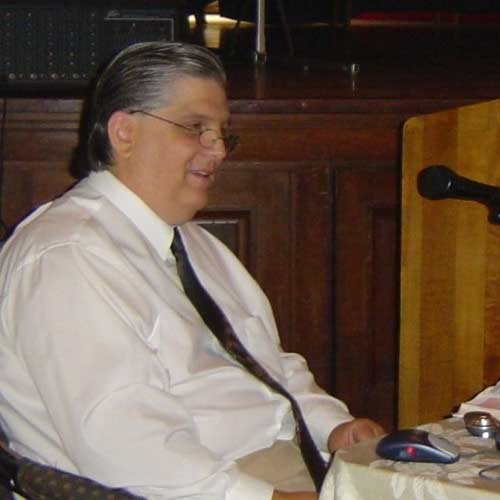
Helping others to participate with the Messiah on earth is perhaps the single most important thing we can give to them and their lineage for all eternity. We hope this lecture, given by Rev. Kevin McCarthy to ministers in Korea, to assist in that work.
Part 2 (Click to rad Part 1)
If Jesus came today …
The Kingdom of God is not coming with signs to be observed, Jesus said in Luke 17:20. It will start as small as a mustard seed, as small as a piece of yeast that is placed in the dough, and will multiply, subtly. Jesus was speaking of the Second Coming in Luke 17:25: “But first he must suffer many things and be rejected by this generation.” Although Jesus predicts his own death three times, he was not predicting his own death in this statement. His topic here, toward the end of his life, is the Second Coming. Let’s ask ourselves: If Jesus came back in the flesh to some churches today, how would they treat him? They might be shocked that he didn’t speak English. And that he wasn’t American, and that he wasn’t a white man. They would be shocked that his name wasn’t Jesus. I’m using the Greek name we gave him, by the way. Of course, he doesn’t mind; he knows whom we’re addressing. But it is possible that he would prefer to address himself by his Hebrew name, the name that God gave him, Yehosua.
Sometimes our concepts and our expectations are more a result of “Well, that’s the way it’s always been” and tradition rather than real truth. And that’s why when Christ comes and faces the very people whom God prepared, they, not the sinner, are the first to stand in the position of resistance and opposition.
When Jesus came, the sinners, the uneducated, and the simple hearted could ascertain that he was the Son of God. It was the doctrinal and the scholarly who rejected Jesus so haughtily because he didn’t fit their expectations. Such a scenario is repeating itself in this age.
Then why must Christ come to the earth again? Scripture tells us that he is certainly not coming again to die for our sins but to complete the dispensation of salvation and to usher in God’s Kingdom. This is verified in Hebrews 9:28: “He will appear a second time, not to bear sin, but to bring salvation to those who are waiting for it,” and in 1 Peter 1:5: ” … who, through faith, are shielded by God’s power until the coming of the salvation that is ready to be revealed in the last time.” If we’re not ready for a new message with regard to the completion of salvation in the Last Days, then we will be committing the same error as the chosen people who felt it was sufficient to cling tenaciously to the Old Testament. When Jesus said he came not to destroy but to fulfill the law, it created such anger in them that they hurled stones at Jesus. When I say that Christ will return to fulfill the New Testament and to reveal the completion of salvation, please watch your hand that it doesn’t begin to grapple for a stone! That angry spirit will come, but it didn’t start with our generation. It comes to us from a generation of long ago that is seeking restoration in us.
The Kingdom postponed
Jesus came to the earth to establish God’s Kingdom, just as Adam would have established God’s Kingdom beginning on earth if he had kept faith. Jesus also states that what is sown on earth is reaped in heaven the foundation must be made on earth if it is to be reaped in heaven. When Jesus said, “My Kingdom is not of this world,” in John 18:16, he didn’t mean that there should not be a visible, earthly manifestation of the Kingdom. For he also goes on to say,
“But my Kingdom is not now of this world.” In other words, his Kingdom is meant to be of this world, but because of Israel’s faithlessness, Jesus’ Kingdom as he is approaching the cross could not
now be of this world. The vision of the Kingdom of God in a visible, earthly manifestation is laid out in prophesy in Isaiah, chapters 2, 9, and 11 and Psalms 72. Here is a clear expression of a world under the universal acceptance of Christ’s authority: They will study war no more; he will judge between the nations and settle disputes between many lands; they will beat their swords into ploughshares and their spears into pruning hooks; all kings will recognize and bow down to him. All those prophesies that were to be realized 2,000 years ago are now finally to be fulfilled in this age. Christians who are merely looking for that spiritual heaven and have no concern for this world are badly mistaken. Before we can expect the Kingdom in spirit, we have to work to build that Kingdom in this world.
When God’s will to create the Kingdom of Heaven on earth couldn’t be fulfilled at that time, Jesus had to atone for the people’s faithless condition by shedding his blood on Calvary. He then told us that the Kingdom would arrive in the future with his second coming. When man is faithful, God’s original will can be fulfilled; if he is not, a secondary course becomes necessary in order to bring man back to the faith needed to fulfill the original will. For example, during the Babylonian exile, if the Israelites kept faith no prophets would ever have come. When they turned from faith, prophets would appear telling them, in essence, “Repent and you can remain in the land. God takes no pleasure in the sin of the wicked.” (Ezekiel 33:11) When that faith and repentance is not forthcoming, the curse in the law is invoked, as Jeremiah announced in Jer. 25:11.
The ultimate goal of Christian history is to return to the position where the New Israel, by recognizing and responding to Christ’s second coming, can establish the Kingdom of God on earth. Therefore, we can fully expect that he will come in an unexpected way and we will have the same responsibility to recognize Christ’s return. We’ve inherited the wrong attitude and the wrong doctrinal thinking from 2,000 years ago. We cannot think that it’s enough to be a comfortable Christian. No, we must do what was not done 2,000 years ago. I know this is not an easy message, but it must be this way.
Because of the faithlessness of Israel, the cross and the shedding of Christ’s blood became the basis of our salvation, and certainly on the day of Jesus’ resurrection death was conquered. Through the Pentecost, the channel for the regenerative powers of God was instituted for man. So now we are no longer in the age of law but are standing in the age of grace through faith, and Jesus is expecting a whole lot more from us than he did from the first Israel.
Hope of physical salvation
We are individually saved through the salvation that Jesus and the Holy Spirit provide for us. Yet Jesus tells us that he must remain in heaven (Acts 3:21) until the time comes for him to restore everything. We are told in Heb. 9:28 and in Peter 1:5 that salvation will be completed when he returns. We are told in Romans 8:23 that with our salvation is a future hope for a future glory the redemption of our bodies. When Jesus said, “It is finished,” he didn’t mean that the dispensation for salvation was over, only that the atoning work at Calvary was finished. The dispensation for salvation will not be over until his Kingdom is firmly implanted.
What was the Kingdom, and how was it to be established? Adam and Eve were to be perfected in the Garden and would have been if they had kept faith in God’s word. Then as parents centered on God, God would have been fully present in their relationship. Therefore, their children would have been born without the taint of original sin, without the stain of fallen nature. They would have been born in the same purity as Adam and Eve, and would have multiplied a sinless foundation from the family to the nation to the world. This was to be the Kingdom on earth that would graduate to the world of spirit.
But through the fall of Adam and Eve, Satan took a position of god and ruler (2 Cor. 4:4; John 12:31), and Adam and Eve bore children who inherited the nature and consequences of original sin. Now we continue to be born as descendants of the spiritually dead Adam. Therefore, salvation involves changing our lineage from the dead Adam to the living Adam. By changing our lineage, we receive the grace of God rather than the degeneration of sin and death.
Why then must Christ come back? I, as an individual, can come to Christ through repentance and be saved, and so can my wife. But when we give birth to a child, we have to ask ourselves a very hard and difficult question: In spite of our personal salvation, are our children born as descendants of the dead Adam or the living Adam? Even though parents have come to Christ, still the children are, by heritage, linked to the dead Adam. That’s why Christ must come to establish the original standard of parents and marriage so that children are born fully under the heritage of God, and have no connection spiritually or otherwise with the dead Adam. Then the inheritance of original sin and its consequences will cease, and children will multiply as they should have multiplied in the Garden of Eden: from the family, to the society, nation, and world. The first man and woman who can pass on the inheritance of God to their children and extend salvation from the individual level to the family level are called the “True Parents” of mankind.
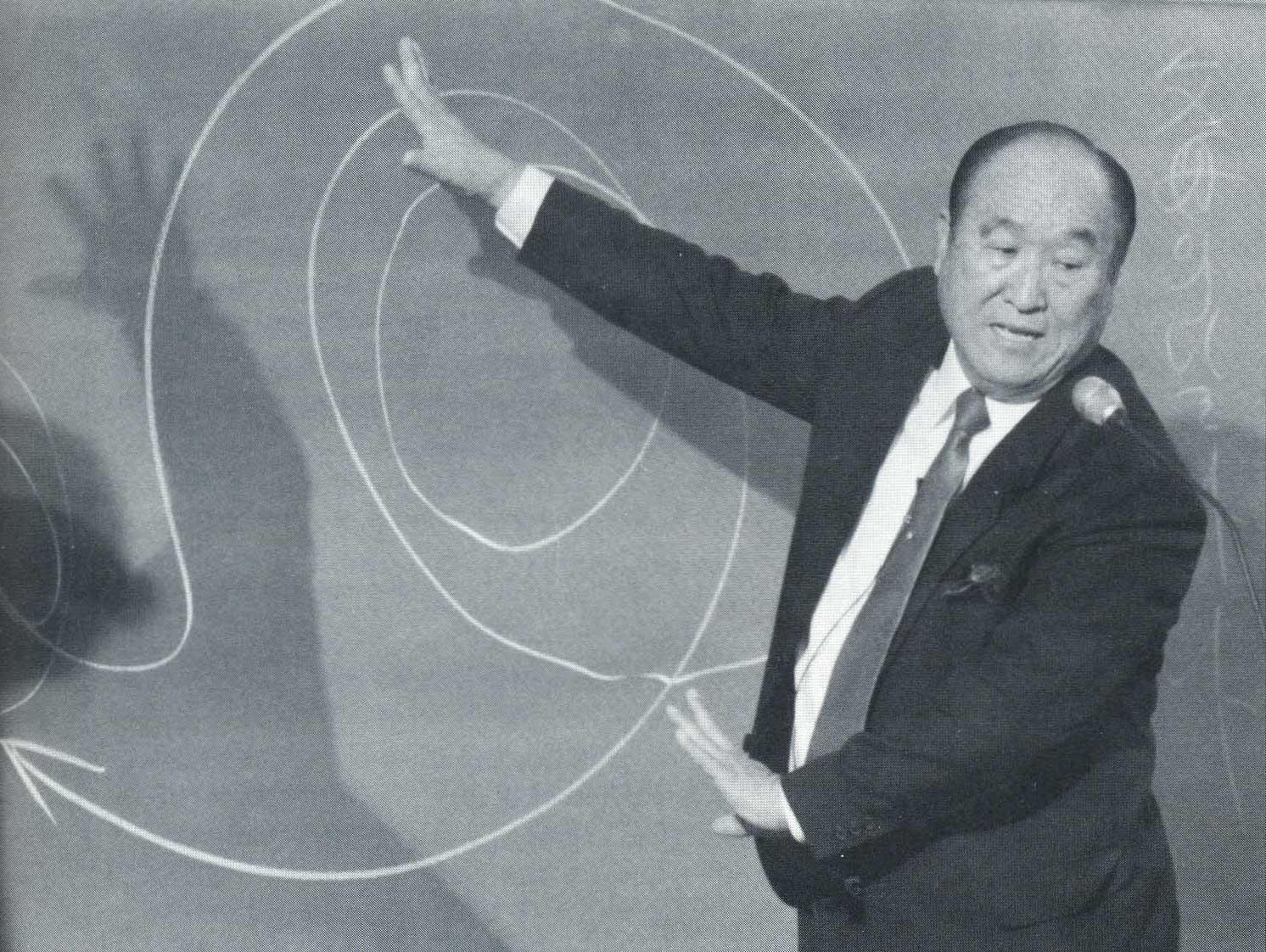
Testimony of Holy Scripture
Then how does Jesus return in the flesh to give his blessing to mankind? Let’s examine the biblical trend of second comings. Cain and Abel had a second coming in Esau and Jacob. The second coming of Elijah was in the spirit and power of Elijah, not Elijah himself. Therefore, just as the return of Elijah meant that the mission of Elijah was to be fulfilled by a representative of Elijah, Jesus will anoint a representative on earth to share the blessing of the Kingdom with his followers and the world. That figure will not be a replacement for Jesus, or in competition with Jesus, or Jesus himself. Jesus will anoint an individual who is most trustworthy and who is willing to go as difficult a course as Jesus himself went while he was on earth. Jesus will call that individual and send him forth in his own spirit, power, and authority.
In Rev. 2:17, Jesus is speaking about this figure: “I will give some of the hidden manna and a white stone with a new name written on it.” What does a white stone symbolize? It symbolizes Christ with a new name, a name that is known only to him who receives it. Again, in Rev. 2:26, Jesus speaks about this figure: “I will give him authority over the nations.” Then Jesus quotes the messianic psalm in Ps. 2:9: “He will rule them with an iron scepter; he will dash them to pieces like pottery.” Jesus doesn’t mean this figure will literally do that; he says this to indicate that this chosen figure on earth will receive his I authority from Jesus’ hand. He will be exclusively linked to Jesus in that authority. “Just as I have received authority. “Just as I have received authority from my Father,” Jesus is saying, “I will also give him the morning star” (Rev. 2:2728). What is the morning star? In Rev. 22:16, the morning star is Jesus. Therefore, Jesus is indicating that he will share his messianic authority and role with this figure. He will not be a replacement for Jesus, but Jesus will be with him. This connects to Rev. 12:5, “She gave birth to a male child, one who is to rule all nations.” He will be born of a woman on earth. In Rev. 3:12, Jesus says, “I will write on him the name of my God and the name of the city of my God, the New Jerusalem, and I will write on him my new name.” What does it mean, “new name”? Just as Elijah had the new name of John, the return of Christ also will have a different name. Just as the return of Elijah brought the return of the role of Elijah, so the return of Christ will bring the return of Christ’s role.
Finally, we see the testimony of Rev. 19:1116: “I saw heaven standing open and there before me was a white horse, whose rider is called Faithful and True. With justice he judges and makes war. His eyes are like blazing fire, and on his head are many crowns. He has a name written on him that no one but he himself knows …. ” Most Christians assume that the rider on the white horse is Jesus himself, but in fact, this figure is the one appointed by Jesus. Notice especially the 12th verse:” … he has a name written on him that no one but he himself knows.” Who has written this name? In Rev. 3:12, the spirit of Jesus says to John the Revelator: ” … and I, Jesus, will write on him my new name.” It is Jesus who has written the new name on the person in Rev. 19:1116. Then clearly the person with the new name written upon him could not be Jesus himself, but the person called by Jesus to fulfill the role of Jesus. Rev. 19 goes on from the 12th verse to the 16th verse thusly:” … He is dressed in a robe dipped in blood and his name is the Word of God. The armies of heaven were following him, riding on white horses and dressed in fine linen, white and clean. Out of his mouth comes a sharp sword with which to strike down the nations. He will rule. them with an iron scepter. He treads the winepress of the fury of the wrath of God Almighty. On his robe and on his thigh he has this name written on him: KING OF KINGS AND LORD OF LORDS”
Therefore, Jesus will anoint this figure a man in the flesh whom Jesus will be with more than any other man to fulfill the Three Blessings and to begin the heritage of God with the generation alive at his corning, establishing the Kingdom of Heaven on earth. The internal foundation for the Kingdom is the cleansing of the lineage of man, so that the inheritance of God can pass from parents to children. Once that foundation has been made, then external efforts to change our society and world will bring about the external manifestation of God’s Kingdom.
WHERE?
Then from where will this figure chosen by Jesus come? Will it be someone from Israel? Probably not, because in Matthew 21:43 Jesus said, “The kingdom will be taken from you and given to another nation that can produce the fruits.” Christ will come amongst Christians.
There is an important parallel to the example of Abraham, Isaac and Jacob. Because Abraham did not fulfill his mission, it was passed on to Isaac, who then produced one who could actually get the victory Jacob. The same relationship exists between the first Israel, which did not fulfill its mission, and the second Israel, which is Christianity. Out of Christianity will emerge the new Israel, which is Korea. Korea is in the position of Jacob. God sees three Israels: the first Israel, which is the nation of Israel; the second Israel, which is the 2,000year history of world Christianity; finally He sees the third Israel, which is the nation of Korea. It’s not by coincidence that in 1948 the nation of Israel was reformed and in the same year the nation of Korea was formed and officially chartered.
Why did God choose such a small nation as Korea? I thought for sure he was going to choose America! However, once before He also chose a small, seemingly insignificant nation called Israel. One reason is messianic prophesy. There’s a long history in Korea of Christian prophets who have received messages from Godin the same way that Anna and Simeon received the message that Christ will be born in Korea, where the dispensation of the Second Corning will be fulfilled. These prophets were devout, faithful Christians, as pure in their faith as was Anna the prophetess.
Korea is a microcosm of our divided world. The battle of Armageddon taking place right in front of us is the struggle between the world that believes in God and the world that believes there is no God, the so-called free world and communist world. Communism is the Antichrist! How amazing that the Antichrist has been swallowing up nation after nation right under our noses! As Satan’s strategy is being implemented and the world Christian foundation retreats daily, we sit waiting for someone to appear with 666 on his forehead. We’re in trouble because Satan has us looking to our reward and overlooking our responsibility.
Where is communism rising most? It’s in those areas of the world where Christians have failed and Marxism appears as a viable alternative especially among the third world where people are desperate for a better way of life. Unfortunately, some Christian ministers and missionaries came into these nations and gave the people the word of God with their right hand and with their left hand sent all the nation’s wealth and resources back to their home nation. This happened all the time. Our missionaries have gone to places in the world where Jesus’ name is loved and respected, but the word “Christian” invokes immeasurable resentment. This is the environment where Marxism rises.
Who’s going to take responsibility for that? Who is going to say, “We have to reverse that”? We must take responsibility for the rise of communism. We must not hate the communists; they are people who missed their opportunity to experience the true vision of Christianity because throughout history too many missionaries became embroiled in the self-interests of their own nation. Rev. Moon’s vision is for every missionary to carry out two responsibilities: one, to give the word of God to the people, and two, to resurrect the economic and social base of every nation. Rev. Moon wants every nation to have the economic means to determine its own national destiny centered on God. A man with such a vision, and who is actually carrying that out, will have every evil in this world come against him.
Probably the greatest reason why God chose Korea is because of the fervent faith and the history of suffering of the Korean Christians. There are churches in every village that have a recent history of martyrdom. There’s a church not 10 miles from Seoul that was burnt to the ground during the time of the Japanese occupation with the congregation inside singing and praising God. You can go to any of these villages and they will give you testimonies of their church’s martyrs. Their devout faith and the incredible passion of their prayer life are indicative that God is working in a very special way in Korea.
I urge you in your remaining time in Korea to walk into some of these hills and pray. See if you don’t feel a special anointment, a special holiness and sacredness, in this nation. This is a nation sanctified by the blood of its many martyrs.

Not proclaimed, but revealed
Finally, then, who is Rev. Moon? Once Rev. Moon was asked by an eminent theologian if he, Rev. Moon, was the Messiah. Rev. Moon answered by saying that if loving God with all your heart, all your strength, and all your soul means you’re the Messiah, then he must be the Messiah but he went on to say that by that definition we should all become a Messiah.
Who is Rev. Moon? Last year Rev. Moon spoke to one of our ICC gatherings for about 30 minutes. Many ministers remarked that Rev. Moon said more in 30 minutes than in all the hours of lectures that they had heard from me! He concluded his talk by posing the very question here before us now: Who is Rev. Moon? Everyone perked up excitedly, waiting to hear what he would say. Rev. Moon smiled and then answered his own question: “Rev. Moon is … nobody.” It was an unexpected answer. He smiled very warmly and continued by saying that all he knows about himself is that every day, in every cell of his body, he feels the love of God and the burning desire to share that love with others in faithful obedience to the direction of God. This was not theology this was a self-evident truth. Everyone in that room was bound together by the warmth and sincerity that emanated from this man.
Who is Rev. Moon for me? After I heard this lecture for the first time, I prayed deeply and for a long time about all the things I had heard. It was a very serious moment, and I knew that my prayer would have to be as serious as the prayers of Anna the Prophetess or Simeon had been. God confirmed for me that indeed Rev. Moon is the man that Jesus has anointed, is the man that this lecture is revealing. I’m not proclaiming this to you; I’m reporting what God put in my heart and confirmed for me. No man could confirm such a thing, only God.
The question for us then isn’t, “Who is Rev. Moon?” The question we should be asking is, “Did Rev. Moon really meet Jesus on that Korean mountainside on Easter morning of 1936?” and the question we should ask after that is, “Is it possible for me to talk with Jesus? Can I meet Jesus? Can Jesus talk to me as vividly as he did to his apostles after his resurrection?” We can agree that Jesus knows if he, Jesus, has called this man to fulfill the role described in this lecture. He knows ask him! One thing is for sure: the more we live like Jesus, the more we will be like him, and the more we are like him, then the more we can recognize his voice.