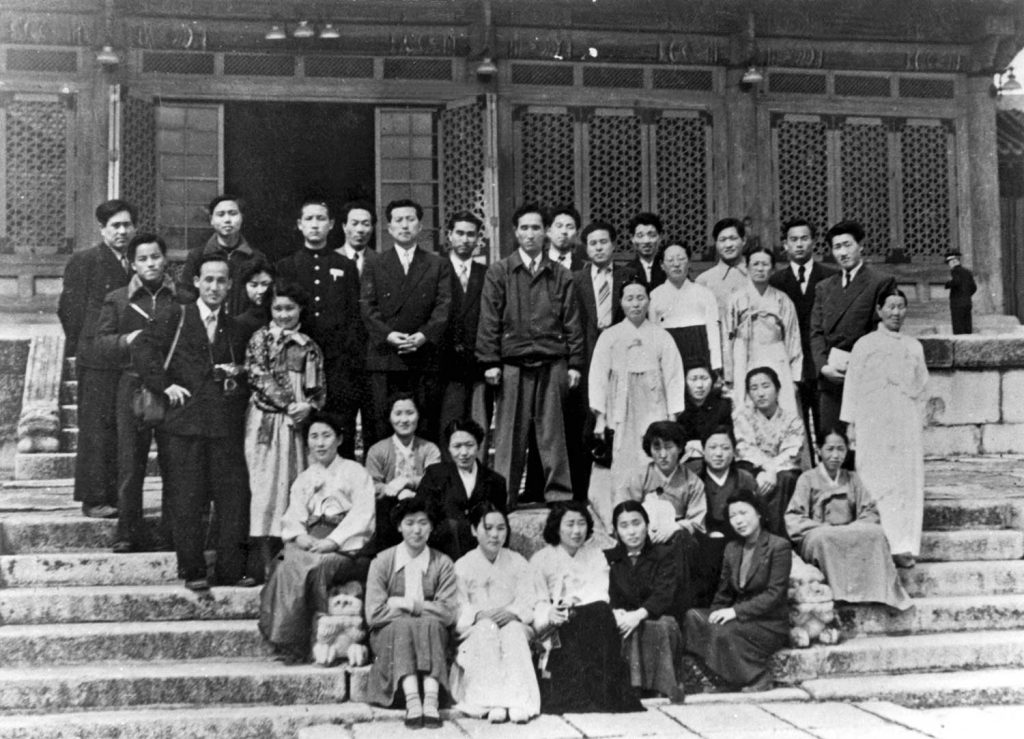
Based on extracts from his speeches throughout his life
Earlier installments are available for reading.
Arrest and Imprisonment in South Korea
In this installment, Father describes the accusations he received and his resultant incarceration in Seodaemun Prison in Seoul in 1955.
Part 58
In 1955, through the incident at Ewha University and other incidents as well, all Korea rose in an uproar to get rid of me. One day the Dong-Ah Ilbo was supporting me and the next it was opposing me.[1] Thus, the five main government ministers drew up a plan to catch and destroy Rev. Moon. They planned this with the Rhee regime, but no matter how deep they delved, I had done nothing wrong. Though they were looking for all kinds of heinous crimes to charge me with, do you think they could find anything I was guilty of?
The university authorities had accused me of being anti-family, and that I practiced sexual immorality, but the prosecutors could not find any evidence to support those charges. Therefore, they arrested me on the charge that I evaded military service. Did I evade military service? I had short hair during the Korean War, so they thought I belonged to the North Korean People’s Army. I had come down from North Korea and had served time in prison in the meantime, so I was past the age of eligibility for conscription. Yet they were accusing me of evading military service. Then they found that, even in that, I had kept within the law. Even though I was willing to join the South Korean army, I was classified as “third class,” which exempted me from military service. Hence I was not able to join the army. In the end, no matter how much the prosecutors tried to make a case against me, they could not find me guilty of any of the charges. That is why I was acquitted after three months.
However, most people did not learn that I was declared innocent. Christian ministers did not inform their members that the court had acquitted me. The newspaper reports about it were very brief. Our church leaders suggested, “Let’s make a statement about the Seodaemun incident and the groundless allegations against the Unification Church.”
Yet to me, the allegations were not the issue, and my imprisonment was not the issue. The issue to me was that the Republic of Korea had betrayed me. It would do no good to regard Korea as my enemy and fight back. Rather, in order to restore Korea, we would have to move on to the world level and then return to Korea. This was the path of restoration through indemnity that lay before us.
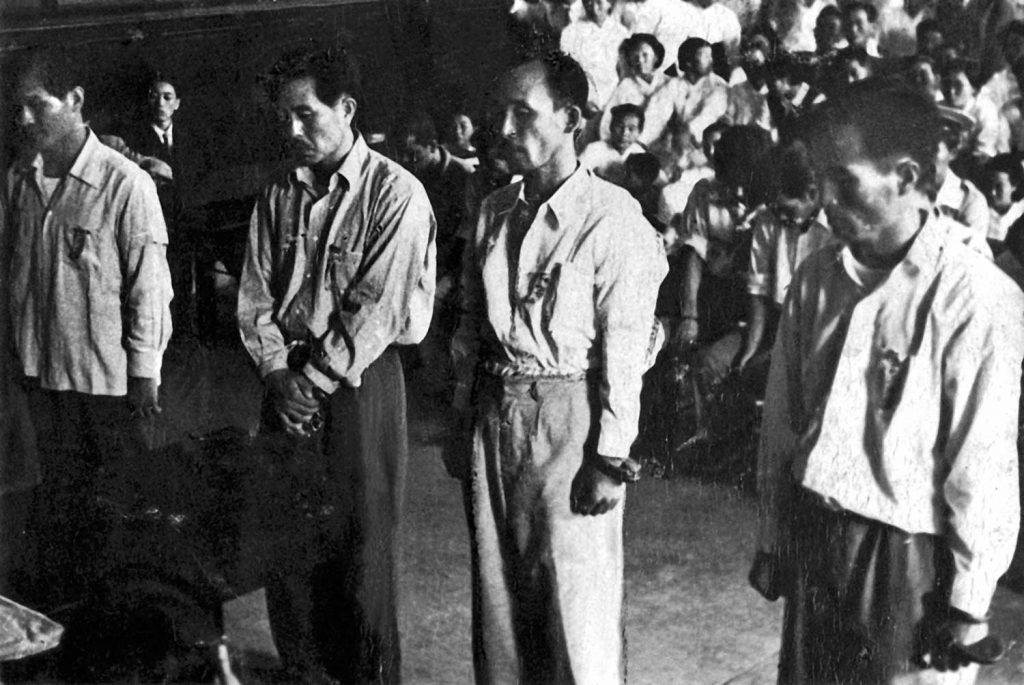
Interrogation
What is my responsibility? When I am chased and cornered and imprisoned, what is it that I must do then? I need to accept blows on behalf of all humanity; I must draw together and annihilate all the suffering in the world. I even regard hardships as a matter of course, thinking, “Can I expect to avoid such hardships when I am pioneering the path of suffering, for the sake of the world?” I have endured all kinds of things, but I say to myself, “My direction is as unchangeable as rock. Until I can realize the longed-for nation, I have to fight and survive, not die, even if I have to experience continual sacrifice.”
In serving and following God, I have never once thought about myself. I have always thought I should feel sympathy for Him. I felt like that even when I was dragged to the Seodaemun Police Station and found myself a prisoner behind bars. From the first step I took in following the path of the providence, I comforted God, saying “I am still alive, and for this I’m grateful.” I have traveled along such a path in order to establish the historic standard of indemnity that characterizes the original ideology of the Unification Church of today. This is something no one can invade, no matter how much he tries.
When I was in Seodaemun Prison, I did not wish for Korea to perish. I did not wish for the Christian churches to perish. Instead, in my heart I thought, “Please forgive them their sin of ignorance. Please allow me to shoulder all the sins committed by Korea, this poor nation, that I may indemnify them. How good it would be if the nation could receive blessings just by my being mistreated.”
I would say in my heart, “Heavenly Father, please love this beloved people more than I love them. Heavenly Father, please love this world more than I love it. You need not pity me. Even if I am to die, I will not die an insignificant person.” Though it was this insignificant man who was in charge of leading all the people in the world, I asked God to not see their faults as faults but instead to spur me on and allow me to pay indemnity for and complement all of them, if that were possible. Thus have I fought my way through.
That was what pleased God, and that served as the condition to bring fire to His empty heart, and so I was given the guarantee, “You, Moon, you will never perish wherever you go, even if you are somewhere where you should perish.”
Even when I was being interrogated in a police station, when the people filing the complaint began to talk with me, I would eventually swallow them up. I would point out to them, “You are writing the statement, so why aren’t you writing this proper content? This is where you should write such and such.” But what I told them to write would completely contradict what was already in the statement. They would write it down, and then tear up the whole thing.
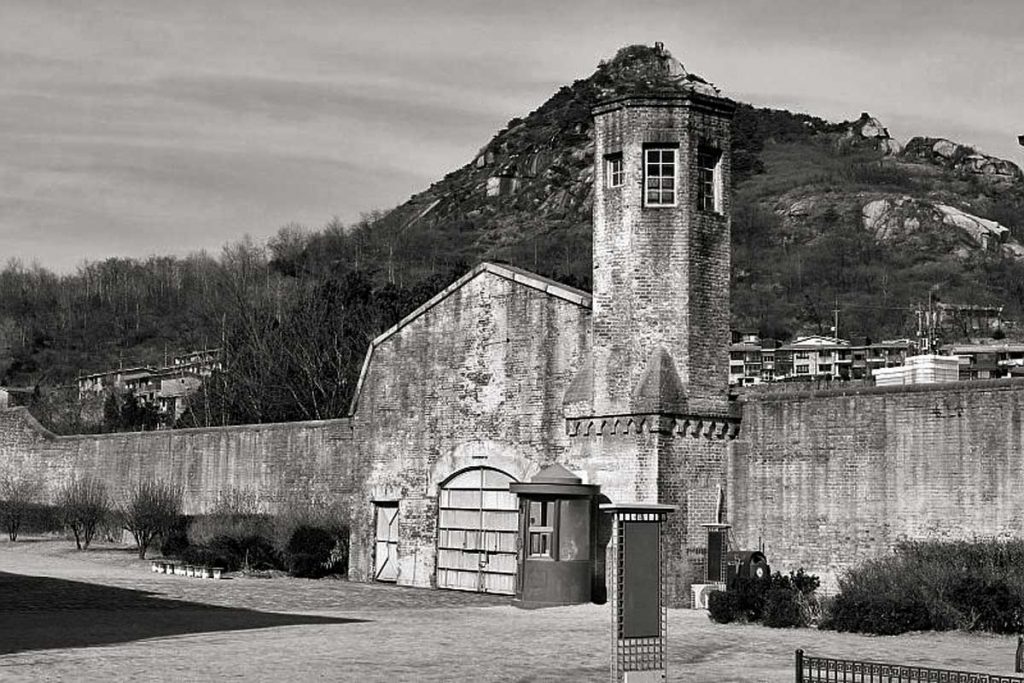
Entering Seodaemun Prison
I was manacled when I was taken to Seodaemun Prison, but I was not ashamed. In front of heaven and earth I felt no shame. I had dignity. Even though I was going to be constrained behind bars, I was not even a little sad. I felt ashamed in front of neither God nor man.
I had done nothing wrong. I was pouring my whole life into teaching young people who would otherwise have ended up as criminals or prostitutes. I was teaching them to become innocent people, devoted children, patriots and the young people the nation needs.
Though I was without sin, I was put in chains and sent to prison. I am not ashamed about that. Everyone, including my friends scorned me and pointed their fingers at me, saying, “Look at that, look at that!” However, my response was, “Let’s wait; wait ten years and see.” During my journey, along this miserable path, I said to those who shot arrows of accusation at me, “You’ll see; I will be victorious.”
You should be aware that those lessons I learned from these difficult experiences remain within me today.
Bad things go to ruin and good things thrive. No matter how dirty a place I had to enter, there was no way I could be brought to ruin when could the truth of the situation attested to the pure deeds I was carrying out under Heaven.
When I was manacled and on my way to the prison, I was belittled and scolded by people on the street, even the women. But I told them, “You may walk with a dignified air, and I may look like a miserable person, but you cannot see clearly because you have no standard of comparison. When the standard is revealed, everything will be made clear.”
Disciples who suffered together
Kim Won-pil, Eu Hyo-won, Eu Hyo-yeong, Eu Hyo-min were in prison and faced trial together.
Despite all my strenuous labor, I don’t have any possessions, even now. Hardships are all that’s left for me, privations for my own sake and privations for the sake of God’s will. Everything can be stolen, but nobody can take away the sympathy God had for me in His heart. That’s my treasure.
When I look at you, you may be good-looking and bright, but the primary condition is how hard you have worked for God’s will. I know clearly what I have gone through, so until I die I won’t forget people who shed tears with me along the way, who sympathized with me, and who sincerely did their best to fulfill God’s will and to dissolve His sorrow.
Now when I think about those older church members who suffered with me, who went to prison with me. Actually they did not have any particular achievements but looking back at those times from the viewpoint of heart, they reached the summit. They were on the front line, so with one word of consolation they brought a millennium of solace. When we were in the jaws of death, one helpful word was like an original stream of strength newly bubbling up like a fountain. That’s why I think I should first help the people who were with me at that time.
Book 7 Chapter 2 in ChamBumo Gyeong (from page 753 in the English language edition) contains Father’s more detailed account of the witnessing campaign at Ewha and Yonsei universities and his subsequent incarceration in Seodaemum Prison.
To be continued….
[1] It was true that some of the Korean newspapers wanted to give the new Unification Church the benefit of the doubt; not all of them opposed all of the time. There is a good collection of early newspaper cuttings at the history archives.