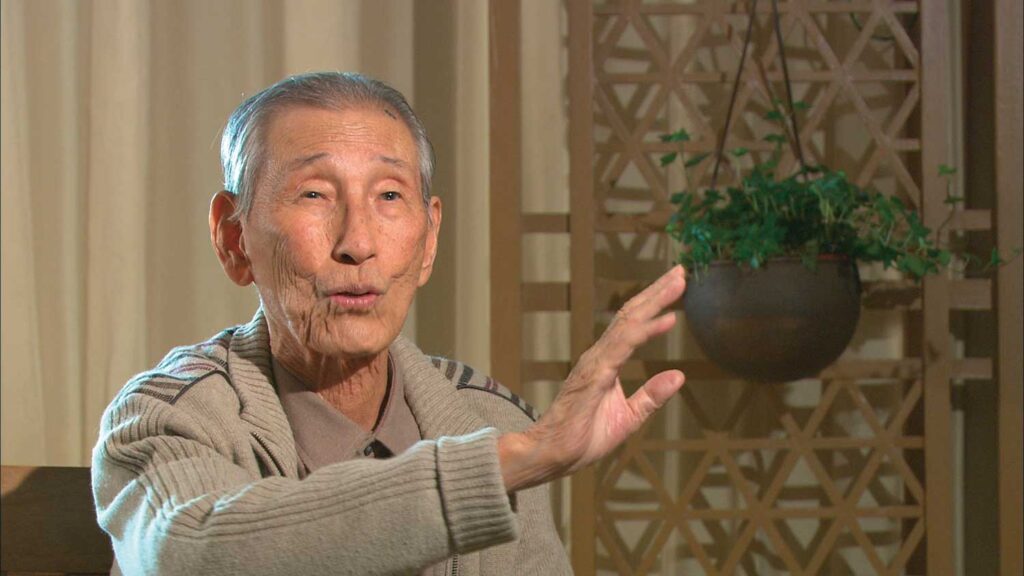
Aum Duk-moon was born in Seoul on March 10, 1919. He met Father at the Waseda Technical High School in Tokyo in 1941 and then later a few years later in the course of their work. The two met again in refugee-flooded Busan during the Korean War early in 1951, days after Father had arrived there at the end of his long trek from the North. Father stayed at Mr. Aum’s home for a time and taught him the Principle. Mr. Aum went on the found an architectural design company that became very successful. In an interview Peace TV conducted with him in 2010, Mr. Aum—who was then ninety-one years of age—reminisced about earlier times, offering a unique perspective on stories we have heard from Father himself. This week and next week we are posting the English translation of what he said.
How did you come to see Rev. Moon differently?
He would talk for a long time at night, about such things as life in Hungnam Prison. He was a leader even when he was in that frightening place. As a leader, he enlightened others and he prepared himself to fight it out.
And he talked about those things?
Mostly about those things, and also about the people who were involved in such things, and those who had died. There were many such stories, quite numerous in fact.
You mentioned how he had spoken through the night.
He did talk all night long, and his interpretations were different. They were quite extraordinary. In other words, what he said about the banishment of Adam and Eve from the Garden of Eden was different from what is written in the Bible. The motive and the origin, the origin and the purpose were all different.
So you came to see Rev. Moon in a new light when you heard him speak?
Yes. I would be lying if I said that I wasn’t impressed by what he said.
As you heard those stories, did Rev. Moon feel different to you from the Rev. Moon of old?
He was different. Before, I had thought of him only as a patriotic comrade, but now he was a patriotic comrade who was also like the Messiah, with religious faith. He was the Messiah.
He’s younger than you are, isn’t he? You were in the same year at school, but you’re a year older.
We were in the same year.
How can a friend become a teacher?
It’s a matter of respect. I came to respect him because he was a great man. To say it simply, he is a great man. And in regard to religion he is an unusual person. He is the Messiah. He is indeed like the Messiah, and not an ordinary person.
You didn’t feel this when you were both studying in Japan?
When we were studying together, he didn’t say one word about such things. At that time, I didn’t have that respect for him, because he never said a word about religious belief or the church. So it came as quite a shock to me when, after not saying even a word about it, he had become completely different.
After graduating from college, I was working in a large corporation. We were still under Japanese rule. The name of the company was Kashima. I was an employee in the construction department, and he came to work under the electrical department. That’s how we met again. At the time I was in Gangseon in South Pyongan Province, which is situated between Pyongyang and Jinnampo. I went to Gangseon and he stayed in Seoul.
During that time, wasn’t Rev. Moon was taken by the Japanese police and tortured?
He was taken at the time and released after Korea’s liberation.
Did he tell you about it later?
I heard that he suffered severely. At that time, it was very easy for anyone to be taken like that. It happened all the time; Many of those who worked to put things to right were taken.[1]
You told us some interesting stories about how you came to meet and get to know him again.
I saw him in a new light. Because I respected him as the Messiah, I treated him as a superior. To put it simply, I served him as a superior and not just a friend.
I served his food first, and had him sit in the best seat, and washed his clothes for him. Those kinds of things.
From your viewpoint, what made Rev. Moon different?
It was in the Divine Principle of his faith. The Principle he discovered had not been made public at the time, and it was truly impressive.
What did you say to Rev. Moon after you heard it?
I told him I had thought he was my friend, but now I knew that I should treat him, not as a friend, but rather as the Messiah and my teacher.
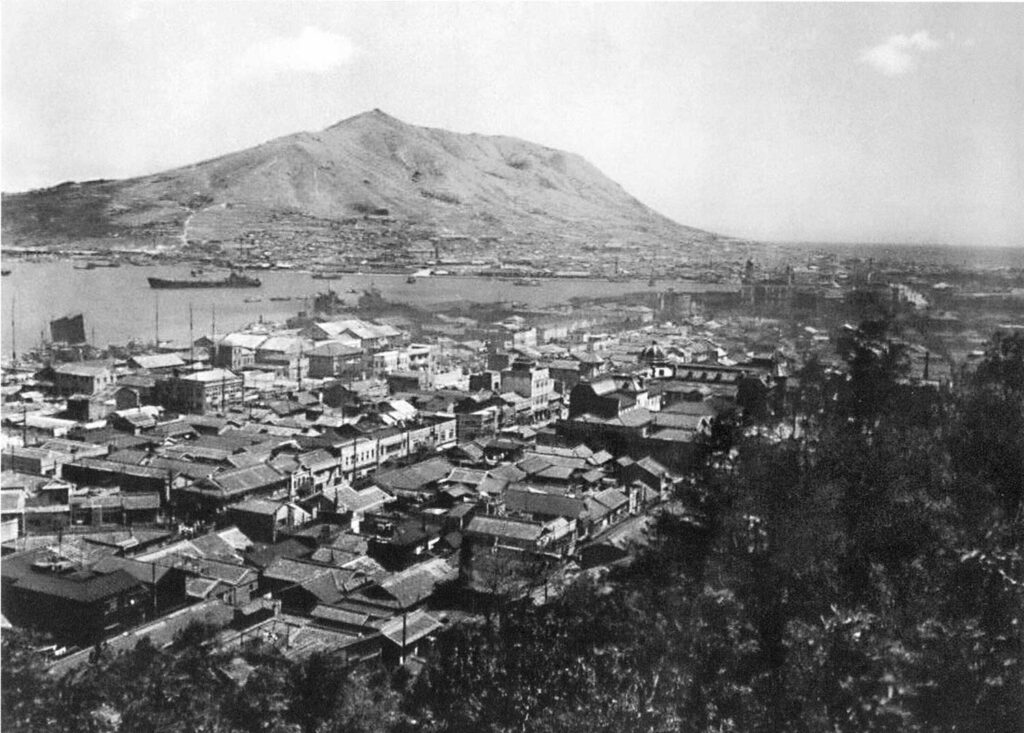
Was it later that you went to Beomnetgol?[2]
Before we went to Beomnetgol, we were turned out of our home on a rainy day, along with my children, with only our bedding. We didn’t have any place to go because it was so sudden. So we went to the home of a distant relative by marriage in Jagalchi Village. We went to the village and pushed our way into their home, without asking for consent from them. And then we stayed up all night and talked, and the owner of the house was abusive, saying I didn’t look after my wife but stayed up all night with my friend. So I had the children and my wife sleep in the inner house and Rev. Moon and I slept in the outer rooms because I thought that would be all right. But the owner found fault with that.
What did you talk about all night?
About the Divine Principle. It is inexhaustible and very long. You can’t express it in just a word or two.
What made you return to Beomnetgol?
We had been kicked out. They told us to leave because they couldn’t have us any longer. So I sent my wife and two children to Masan, and Rev. Moon and I, accompanied by one more person, Kim Won-pil, the three of us went to Beomnetgol, to laborers’ accommodations. We got a place and slept there.
At that time, the will of God came down to Rev. Moon from Heaven, in a way. He began to write down the Divine Principle. Until then, he had only talked about it, but from then on, he began to write it down. He began writing on old school test papers with a pencil, and he was so fast because he had a scratchy handwriting. He wrote so fast that Kim Won-pil sat by him and sharpened pencils for him. As soon as he was given a new pencil, he continued to write. There was no time to sharpen pencils. In that way he wrote day and night for several days.
In the back room other laborers came in at night and sang, drunk with alcohol. Only a window separated us from them, so although there were two rooms, it was almost as if we were in the same room. So we could not stay there any longer and went farther up into Beomnetgol and found a site.
We found a place and built a mud-hut there; and that was the Beomnetgol mud-hut. We built it together. At the time, war refugees had taken up most of the sites there, so almost no unoccupied land could be found.
We dug up the ground a little, but water flowed out over the rocks. We couldn’t dig there any more, so we left it as it was. We arranged some stones to make a sort of channel for the water to run off. We spread out four or five straw mats over that and built the room over the top.
It wasn’t even a proper mud-hut, so when we stood up the top of our heads grazed the ceiling. We were able to sit down at the center, but at the sides the room was barely three feet in height. The room slanted in a way that you were able to stand up only at the center, because on the sides your heads touched the ceiling.
At night we spread out futons on the floor. I had new futons and bedding that had been made for me by my wife’s family at the time we married. My futon was thick and long because I was tall. It wide as well as long, and once it was spread out over that straw matting, it made a very warm, wonderful bed. It was winter then, and when the futon was spread out in full, three people could sleep together on it.
The way we managed it was like this: Rev. Moon and I would lie with our heads to one side, with our shoulders almost touching. Kim Won-pil would lie in the opposite direction, with his head and shoulders between our legs and with his feet between our shoulders.
We found an old box and acquired a few pots, buying some and finding others, and cooked our food there.
What did Rev. Moon have to do that inspired you take up such a lifestyle with him?
It was the Principle, the Divine Principle of the Unification Church.
Religious faith
Yes it is a religious way of life. Didn’t I say before that he was the Messiah? There is no other way to describe him. How can I possibly express everything in so short a time, all of a sudden? And once you become immersed in the Unification Church….
Please describe Rev. Moon’s character and behavior to help us picture him when he attending Waseda University High School.
He never went out playing about with his friends. He only went to church and was single-minded. But once or twice we climbed Mt. Busa together. We went around together after that. Of course, I liked to drink very much, but not once did we go out to drink together. He had nothing to do with alcohol.
Were you close friends?
We trusted each other. I too was paying my way through school. At the time Japan was an advanced nation and had a good social system, so when we dug up the ground from 9 am to 5 pm they paid us 50,000 won. And if that was not enough, you could go on working till 10 pm. They would pay you for it in the morning, and although you worked fewer hours you still got 50,000 won. But if someone came and said he only wanted to work from 5 to 10, he was not hired. Only those who came in the morning and worked all day had the right to work the evening shift. That was their social system.
At the time, you may have seen him as a man with religious faith, but you must also have seen what he was like as a young man in his twenties.
He was a very diligent man, hardworking and true. He was hardworking, true and exemplary. He set a model example.
[1] A reference to those who actively opposed Japanese annexation
[2]2 This question jumps forward five years or more to the time the two men meet again in Busan during the Korean War