Based on extracts from his speeches throughout his life
Part 21
Earlier installments are available for reading.
Fighting on behalf of the weak
When gangs would pick on a weak person, I would deal with them by myself. I fought them by myself, alone. I met them alone for the sake of the public good. The feeling you have when you are hit can contribute to making your philosophy of life. I assumed responsibility for other people’s problems and I fought for them. Of my own free will, I said, “I’ll teach you a lesson!” You need that kind of quality when you are young. I want to help create that kind of person.
There was a foreman on a work site that used to steal 30 percent of the workers’ wages. I said, “You should not do that!” I resisted him strongly, refusing to give him mine. I didn’t care how ferocious a person might be, I always said, “You should not do that!” I didn’t submit to such people.
Sometimes a smelly, sweaty worker got on the tram or bus and stood next to a lady. The smell was so terrible that the woman would elbow her way through the other people on the bus to try to get away from him. I also lived like that. When my mother saw me in that state, you can just imagine how much she cried, seeing the son she loved the most, the son she had raised like gold or jade, living like that. Whenever I see someone like that, I always think that that person also has a mother and father. I imagine how much pain and sorrow the parents feel to see their child trying to make a living in such a way.
Ability to make friends
Once I had to return from Japan to Korea, but I didn’t have any money. So I found a lady who was rich, and I tried to persuade her to give me some. I said, “I have come to Japan and done different types of work, but now I need some money to go back to Korea. I think you have more than what I need in your handbag, so please lend me one third of it.” I spoke so sincerely that the lady lent me the money. I bought a ticket and returned to Korea. Later, I paid her back threefold. I have had many similar experiences.
I could make friends easily if I wanted to. I also knew how to have fun if I wanted to. I am good at having fun. If I needed to sing, I would sing. If I needed to dance, I would dance. If I needed to beat out a rhythm, I could do it. I was good at it. I did everything. Anyway you like to look at it, I was good at everything.
I had many Japanese friends, too. Those were the days of Japanese imperial rule over Korea. Even though we were doing everything in our power to thwart Japan, I treated my Japanese friends well. Those friends came to me to ask for advice when they had problems. They would come and ask, “How is Korea?” Then they would reveal their hearts to me. They said I was their best friend. They confessed everything to me. I had Japanese friends who came to me saying, “I just have to tell you this, and you are the only one I can tell it to.”
Wherever you go, become a person who opens your heart to other people. You must make them feel that they just have to express the deepest parts of their hearts to you. When they do, you have to receive their secrets within your heart and make them feel comfortable. You have to be a person who makes others feel at ease.
From September 30, 1943
I had gone to Tokyo to study, but they graduated us six months early so students could do military service. Under the Japanese, students of subjects related with engineering were graduated six months early. By the time I graduated, the war [Second World War] in East Asia was in full swing. Because Japan needed people to support the military effort, they graduated us in September rather than in March.
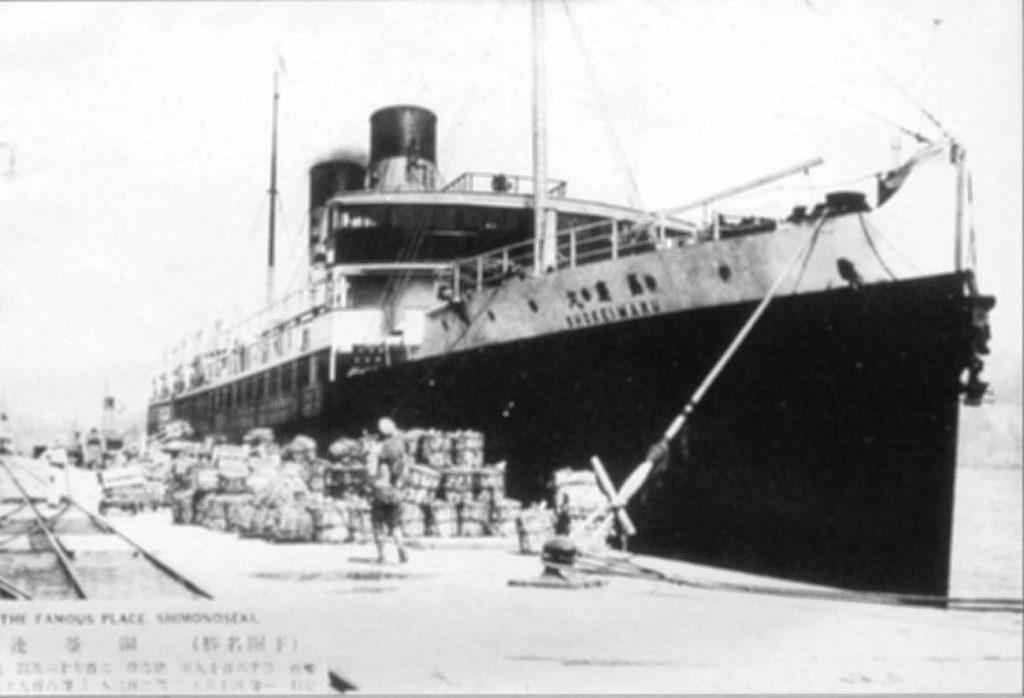
A ferry that was sunk
After I graduated, I bought a ticket on the ferry from Shimonoseki to Busan. From Busan I was to travel overland to Seoul. I would have boarded the Konlin Maru ferryboat on October 4. As it crossed to Busan, the Konlin Maru, which I should have been on, was sunk.
I had gone to the bus stop to catch a bus for Shimonoseki, but my legs wouldn’t move. If I had been onboard that boat, I would have died, but Heaven stopped me from catching it. I know about such happenings. My mind told me to go back to my lodgings.
I didn’t telegraph home saying I wasn’t coming. I went off to the mountains with my friends. It was autumn. I told my friends, “Let’s go to Busa Mountain,” and we went hiking in the mountains.
Our trip lasted several days, and we finally arrived back after a week…. My whole family was in a panic, especially my parents. Their son, who had said which boat he would be on and on which date and at what time he would arrive, hadn’t arrived. You can imagine what an uproar my house was in. There was absolute pandemonium. My family spent two days in and out of the Chongju Police Station in North Pyong-an Province trying to find out what had happened.
It’s about eight kilometers from my village to the town of Chongju. My mother ran those eight kilometers barefoot. Do you think she was of a mind to worry about what clothes or shoes she was wearing? She thought, my son has died! She ran barefoot to Chongju and then traveled immediately down to the Maritime Police Station in Busan for information.
She couldn’t find my name on the list—what could she do? She had thought her son was dead. Her heart propelled her toward the police station barefoot; she didn’t even notice when acacia thorns pierced her feet. She didn’t realize thorns were in her feet until they festered and burst. When I arrived home ten or fifteen days later and heard what had happened, I realized that I had made a mistake. My mother had gone the 230 km from Chongju to Seoul, which took ten hours by train. From there, she traveled on to Busan. Imagine how frantic with worry she must have been. She is truly a great mother. I was not able to show filial devotion toward her. I believe my mother loved me more than any mother ever loved a son. I was unable to show her the proper respect. Why was that? I had to love you first.
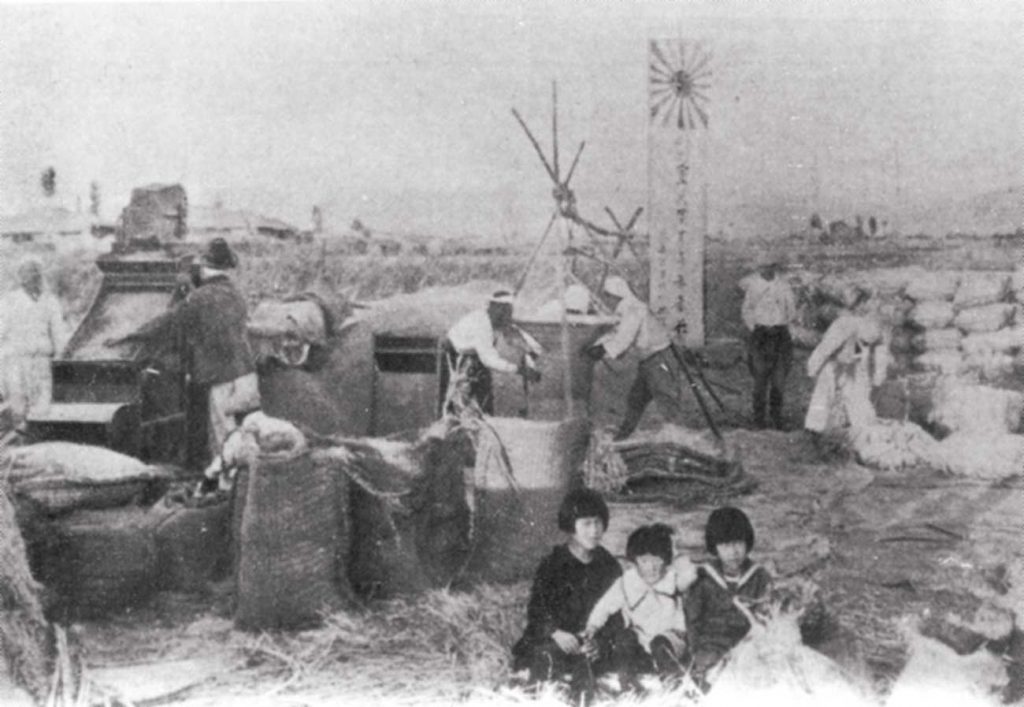
Thoughts of Japan
When I had returned to my home in Korea, I thought of Japan; I will surely return there in twenty years. “Let’s meet again then. I have left without having evened the score with the Japanese Emperor, still unable to relieve the bitter pain of the Korean people, but the time will come when I will teach and lead the young men and women of Japan. Let us meet again then.”
I did return to Japan twenty years later. On my return, I wondered most about the number of young men and women attending the Unification Church I visited. There were about five hundred young people gathered there. They had all come from wealthy families. I asked them what they wanted to do in the future and they all said they would go wherever I guided them. This was quite moving for me. They don’t worry about the Japanese emperor; they just need the Unification Church and Rev. Moon to succeed. I asked those members if they were willing to let me guide them, and they said they were.
Kashima-gumi Construction Co., Seoul, Korea
(Around March 1944)
Kashima is a big Japanese construction company. I got a job working in their Electrical Department. I was the earliest to arrive in the office in the morning, and I worked the latest, too. In this way, I trained myself. It’s pleasant to be the first one in the office. In the long run, it is a valuable experience. A person who works in that way becomes a successor and a master. Likewise, a person who gets up early in the morning because of Heaven’s will and continues to do so all throughout his or her life is a master. That person becomes a master of the heavenly nation.
To be continued.